The Potter and His Clay

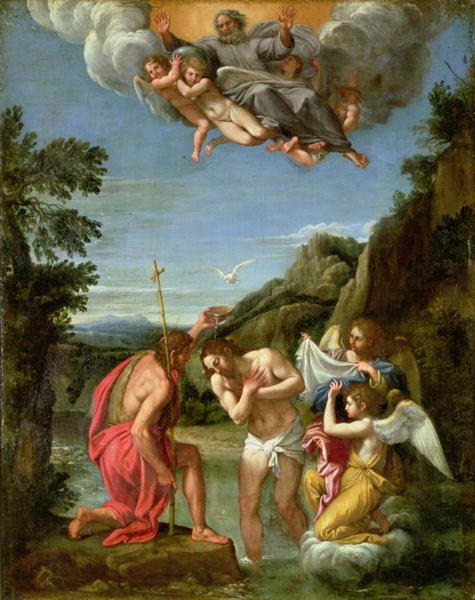
To the Potter and His ClayHe is the potter, we the clay.  He shapes the clay according to his plan.  The potter pours himself into his work and fills it with himself.  The clay is shaped with love and the sweet disciple of a father.  The potter continually reshapes the clay to drawn out its beauty and purpose and to fulfill his plan.  Sometimes the shaping requires a soft, gentle and delicate hand; other times a hand that is firm, strong and bold in its shaping.

Some of the shaped clay is washed clean with water and marked with the glaze of the potter, others not.   The washed and marked clay is fired it in a kiln to set the clay forever and permanently fix the mark of the potter upon the clay.  The fired glaze brilliantly shines forth in stunting glory.  The potter looks on his work with great love and declares it very good.

Posted in Essays, Meditations On Biblical Verses, Uncategorized | Tagged , , , , , , , , | Leave a comment

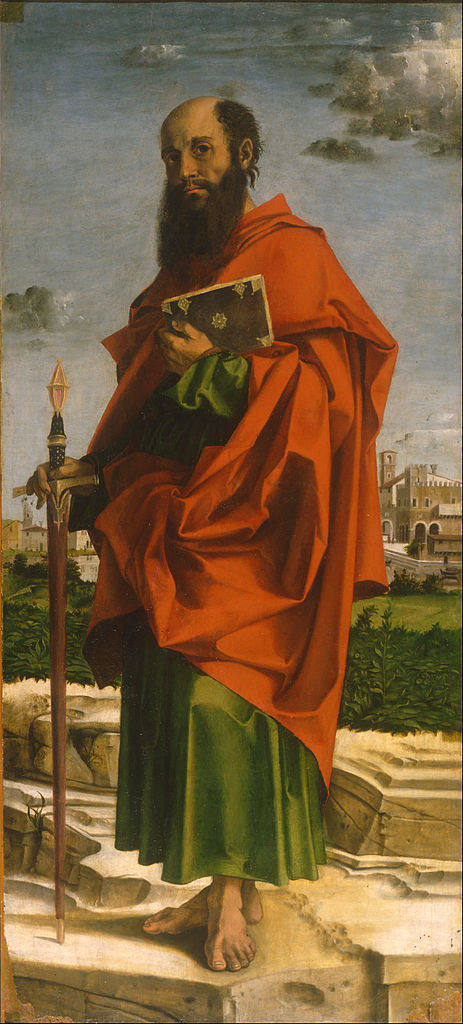
St. Paul on One, Holy, Catholic, and Apostolic Church

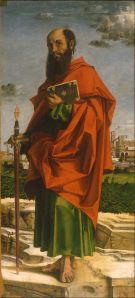
St. Paul on One, Holy, Catholic, and Apostolic ChurchPaul consistently preached in his epistles one, holy, catholic and apostolic church.

Paul was adamant that the Church of Christ be one.  Paul opened his letter to Church in Corinth with an appeal –“I appeal to you, brethren, by the name of our Lord Jesus Christ, that all of you agree and that there be no dissensions among you, that you be united in the same mind and the same judgment” (1 Corinthians 1:10).  In a similar manner he implored the Church in Ephesus, “Christ Jesus himself being the cornerstone, in whom the whole structure is joined together” (Ephesians 2:20-21).

Paul preached a Church of sinners made holy through Christ Jesus “in whom the whole structure is joined together and into a holy temple in the Lord, in whom you also are build into it for a dwelling place of God in the Spirit” (Ephesians 2:21-22).

Paul’s epistles describe the universality (that is, catholic nature) of the Church of Christ, “There is neither Jew nor Greek, there is neither slave nor free, there is neither male nor female; for you are all one in Christ Jesus” (Galatians 3:28).  Furthermore, to church in Ephesus he wrote, “So then, you are no longer strangers and sojourners, but you are fellow citizens with the saints and members of the household of God” (Ephesians 2:19).

Paul preached an apostolic church in his letters to Timothy and the churches in Ephesus and Thessalonica.  In his letter to Timothy, Paul writes: “If I am delayed, you may know how one ought to behave in the household of God, which is the Church of the living God, the pillar and bulwark of truth” (Timothy 3:15).  And, to the church in Ephesus he preached, “build upon the foundation of the apostles and prophets, Christ Jesus himself being the cornerstone” (Ephesians 2:20).  In his epistle to the church in Thessalonica Paul taught “So then, brethren, stand firm and hold to the traditions, which you were taught by us, either by word of mouth or by letter” (2 Thessalonians 2:15).

Posted in Uncategorized | Tagged , , , , , , , , , , , , , , , , | 2 Comments

Sin Endangers the World

Sin Endangers the WorldMy plan for this evening was to read Archbishop Fulton J. Sheen for inspiration for a posting.  I selected an essay of his entitled “The Loss of the Sense of Sin Endangers God’s World”.  The first two paragraphs of his essay overwhelmed me.  I would like to share some of Archbishop Sheen’s key points contained in those first two paragraphs.

The Archbishop posited that the gravest danger facing society is the loss of the sense of sin.  He noted that previous civilizations collapsed due to such a loss.  Unless our civilization maintains sense of sin we are destined to collapse under the weight of societal sin.

The loss of sense of sin is manifested in the lack of remorse and shame of the sinful, and the failure of the good to be shocked by the gross acts of the sinful.  Good and evil are confused; good is seen as evil and evil as good.   Love and truth are misunderstood; love is perceived hate and hate as love; there is no such thing as truth, nothing is right nor is anything wrong.

The last two sentences of his second opening paragraph are powerful: “It has always been the characteristic of a generation in decay to paint the gates of Hell with the gold of Paradise.  In a word, much of the so-called wisdom of our day is made up of that which once nailed our Blessed Lord to the Cross.”

As in past, the Lord provides great prophets.  Will they be heeded?  Or, like in the past will the prophets of age be ignored, and those who follow wonder. Why did they not listen?  Could they not see?  Where their hearts that hardened by sin?

Posted in Essays, Uncategorized | Tagged , , , , , , , , , , | 4 Comments

Take the Lead from Jesus

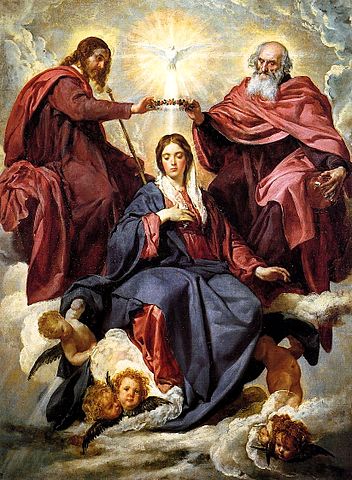
Take the Lead from JesusWho does Jesus honor? Christ Jesus honors His Father and Mary, His Mother.

We should honor those who Jesus honors. Christ went to the Cross in obedience to His Father.  To dishonor His Father is to dishonor Christ Jesus.  Christ respected His Mother and submitted to Mary’s requests. To dishonor Mary, His Mother, is to dishonor Christ.  We should take Jesus’ lead and honor Him by honoring His Father and Mary, His Mother.

Posted in Uncategorized | Tagged , , , , , , | 2 Comments

Forever Restless

Forever RestlessThe heart desires to know truth.  In some endeavors, when knowledge is attained, the heart is satisfied and can rest.

In the endeavor to known God, the heart is forever restless.  For the desire to know God is written on the human heart by God, but full knowledge of God can never be realized.  For how can the finite contain, comprehend, or possess the infinite?  How can the imperfect, fully appreciate the perfect?

God continually reveals Himself to the seeking heart with eyes that seek to see Him and ears that desire to listen to His words.  The heart hopes to gain knowledge and possession of what it desires through its relentless seeking of God.  It is through hope that faith is perfected.  As is so eloquently stated in Hebrews (11:1), “Now faith is the assurance of things hoped for, the conviction of things not seen.”

Posted in Essays, Meditations On Biblical Verses, Uncategorized | Tagged , , , , , , , , , , | 4 Comments

Pride and Concupiscence

Pride and ConcupiscenceWhich is more deadly to the soul, pride or concupiscence?  Of these two great enemies of man, Dietrich von Hilderbrand contends that pride is far more deadly.

Concupiscence inclines man to commit sin.  It is the residual stemming from the disobedience of the first sin that resides in man and unsettles his moral faculties (Catechism of the Catholic Church, paragraph 2515).   As such, concupiscence plays a role in most sin.  However, sin resulting from concupiscence is not a primal evil, for it stems from an inclination.  This can be seen in the Gospels where Christ does not speak harshly to those who commit sin though concupiscence, but forgives them and instructs them to sin no more.

This is in contrast to the sin of pride.  Pride – the glorification of self – was at the root of Satan’s rebel against God and Adam’s fall from grace.  Through pride man seeks his own superiority, power, and splendor and in so doing rejects the supremacy, authority, and glory of God.  For this, Christ speaks more harshly of the sin of pride.

As St. James (James 4:6) reminds us, “God opposes the proud, but gives grace to the humble.”  So, we are to empty self and seek to be meek and humble of spirit.

Posted in Uncategorized | Tagged , , , , , , , , , , | 6 Comments

On Our Faith

On Our FaithOur faith is mysterious.   We are incapable, with our limited reasoning powers, of comprehending God.   He is one, yet three; all powerful, but created man with a free will; true God and true man.

Faith is our response to we cannot comprehend of God, to the mysteries God.  The more God draws us in, the more He reveals of Himself, the more mysterious He becomes, through these mysteries the roots that nurture our faith grow deeper, spread more broadly, and drawn in more of the waters of life. These mysteries are elements of our faith, the  “assurance of things hoped for, the conviction of things not seen” (Hebrews 11:1).

Faith is an act of the human will and intellect that is only possible through the grace of grace of God and the cooperation of the Holy Spirit.   According to St. Thomas Aquinas, “Believing is an act of the intellect assenting to the divine truth by command of the will moved by God through grace.”

Posted in Eucharist, Meditations On Biblical Verses, Uncategorized | Tagged , , , , , , , , , , | 4 Comments

Looking with Our Eyes, Seeing with Our Heart

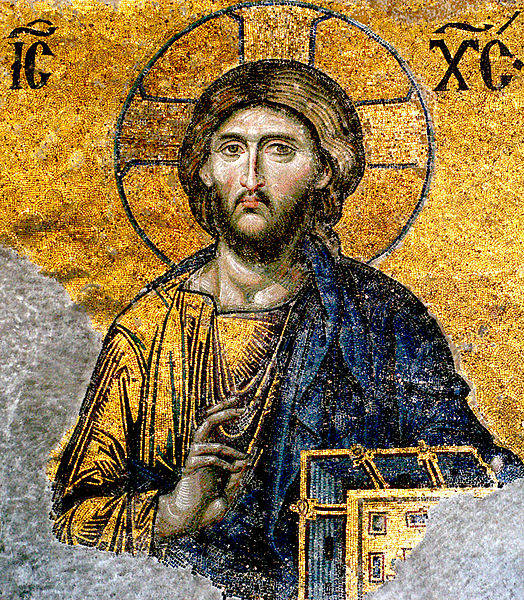
Wikimedia Commons  Desssis Mosaic, Hagia Sophia, Istanbul

Wikimedia Commons
Desssis Mosaic, Hagia Sophia, Istanbul

We look out on the world with our eyes, but see the world with our heart.   Our eyes look on an object, determine its value and hue, and bring the object into focus.  The object our eyes look on, our heart sees with emotion, feeling, or desire.

A heart focused on self sees all in terms of self desires and needs.  A heart focused on God sees and experiences the glory and wonder of God for God holds all in existence and is hidden in all.  We need to keep our heart focused on God to see Him in all we look on.

Posted in Essays | Tagged , , , , , , | 4 Comments

Salvation, Through God and a Person Working Together

Salvation, Through God and Man Working TogetherSt. Paul teaches that salvation is achieved through God and a person working together.  Salvation comes from God alone (Catechism of the Catholic Church, paragraph 169), but is not achieved by God alone.  The person must respond to God’s offer by accepting God’s invitation to dwell in and work through the person.

Jesus clearly and repeatedly taught that salvation is obtained by participating with God.  For example, in Mark (10:17-21) Jesus tells the man who asks what he should do to achieve salvation to follow the commandments, sell what he has, give the money earned from the sale to the poor, and come, follow Him.  Each of these requires an action (work) on the man’s part – follow the commandments, sell what he has, give the proceeds of the sale to the poor, and come, follow Jesus.

Salvation comes to a person from accepting God’s invitation to dwell in and work through the person.  For example, Paul teaches (Galatians 2:20), “And I live, now not I: but Christ lives in me.  And that I live now in the flesh: I live in the faith of the son of God, who loved me and delivered himself from me.”  Paul further writes (2 Corinthians 6:1), “Working together with Him, then, we entreat you not to accept the Grace in God in vain.

Posted in Uncategorized | Tagged , , , , , , , , , , | 2 Comments

Sensing the Lord

Sensing the LordHis wonder, power, and glory abound and are continually before my eyes.  I see His wonder in the flutter of leaves in a calm breeze; His power in billowing storm clouds and bolts of lighting exchanged between them; His glory in the majesty of the skies and their perpetual rhythm that dances before me.

Every aspect of my life He touches: my work, relationships, and recreational activities.  His touch gently and persistently disciples me and leads me to a deeper relationship with Him.

The beautiful smell of incense offered to Lord in prayer fills me with His presence.  The perfumed aroma of His presence lingers long after the pillar of incense disappears.

I incessantly long for the sweet taste of honey and salvation of Christ in form of bread and wine.   It is the taste of His love and my hope and faith.  The taste of Christ sustained me through my youth, sustains me now, and will sustain me forever.

Hearing the Lord in the recesses of my Heart through the clatter of the day is serene and difficult.  To hear the Lord requires a complete surrendering of will, an emptying of self, and abandonment of earthly desires, then an attentive heart will hear the Lord speak in silence.

Posted in Essays | Tagged , , , , , , , , , , , , | 2 Comments