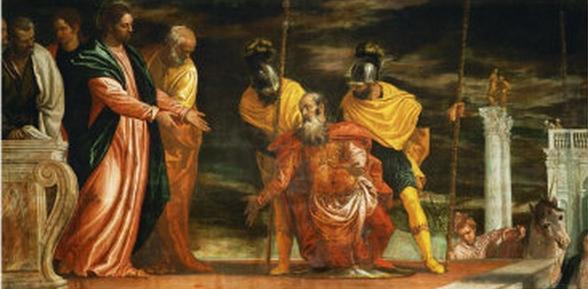
Lord, I Am Not Worthy

Paolo Veronese

Paolo Veronese

“Lord, I am not worthy” can be spoken with great faith and hope or with distrust and despair.

We are all sinners and unworthy to have our Lord under our roof.  Yet, in our unworthiness and sinfulness Christ offered Himself up on the cross, poured out His blood for the redemption of our sins, and conquered death for us.

There is no sin that God is unwilling to forgive.  Forgiveness need only be asked with a humble, contrite heart.  All of Heaven rejoices when a sinner repents and returns to the Lord.

In our unworthiness God reaches down with mercy to meet our needs and relieve our miseries.   In our unworthiness we should humility approach God, who yearns to mercifully forgive our iniquities, heal us, and bless us.

“Lord, I am not worthy” can be spoken in gracious recognition for love and mercy received or as an excuse for spurning God’s love and mercy. 

(updated version)
Posted in Essays, Meditations On Biblical Verses, Uncategorized | Tagged , , , , , , , , , , , , , , , , , , | Leave a comment

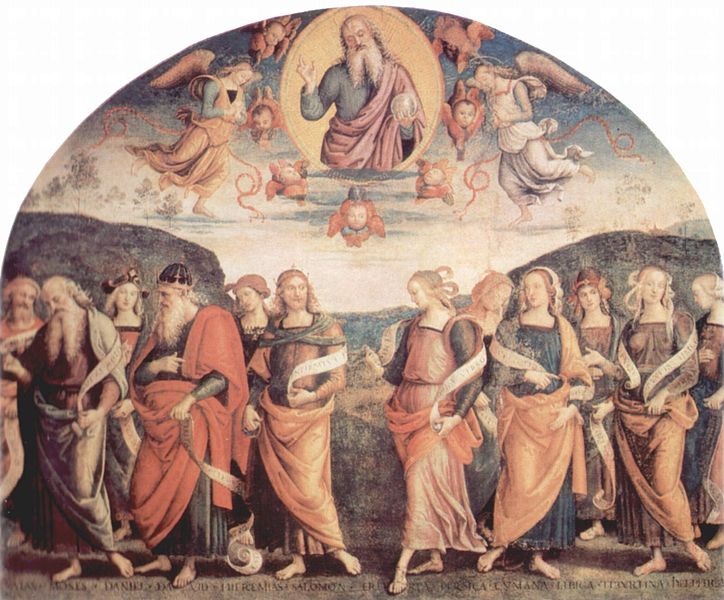
To Knowledge of God

Pietro Perugino

Pietro Perugino

God is omnipotent. He knows everything about us, and wants us to know Him as He knows us.

God has taken us as His spouse.  He wants us to know Him intimately as a spouse, not as someone invoked when in need, or as a friend visited weekends, or as a distant god.  God desires a committed spousal relationship, a total sharing of self, in our goodness and our brokenness.   A love that grows in knowledge of the other, a love that sacrifices for the other.

I believe this is the knowledge Christ speaks about at the time of judgment.  Did we take, know and love Him as our spousal?

Posted in Essays, Uncategorized | Tagged , , , , , , | Leave a comment

St. Thérèse of Lisieux on Littleness

St Therese of Lisieux

St Therese of Lisieux

Littleness is what St. Thérèse desired with all heart.  She saw littleness as a way to spiritual childhood, a pathway to heaven, for “unless you turn and become like children, you will never enter the kingdom of heaven” (Matthew 18:3).

For Thérèse, littleness was surrendering to Jesus, trusting in God, bathing in Christ’s divine mercy.  In her littleness, she rested in God’s protection and found serenity.  St. Thérèse made God her Father in all aspects of her life.

She became completely dependent on God’s merciful grace.  When asked to describe this littleness, she replied:  “When we keep little we recognize our own nothingness, and expect everything from God just as a little child expects everything from his father. Nothing worries us.”

Posted in Essays, Meditations On Biblical Verses, Uncategorized | Tagged , , , , , , , , , , | Leave a comment

Come Follow

St Johns Ashfield

St Johns Ashfield

Come follow me.  What is Christ asking when He calls us to come follow?

Is Christ asking us to follow Him so that we can walk with Him?  He is.  Jesus desires to walk with us, as He walked with the two disciples on the road to Emmaus.

Is Christ asking to us to follow Him so that we can seek what He did?  He is.  Jesus desires that we become persons with whom the Father is well pleased.

Is Jesus asking us to follow Him so that we can attain citizenship in His Kingdom?  He is.  Christ desires that we become citizens of His Kingdom.

Is Christ asking us to follow His actions and emulate Him?  He is.  Jesus desires we become meek and humble as He was and proclaim truth with charity as He did.

Is Christ asking us to follow Him so we can join ourselves to Him?  He is.  Jesus desires that we yoke ourselves to Him as we take up our crosses.

Christ asks much of those who desire to follow Him.  He also provides much and rewards greatly.

Posted in Essays, Uncategorized | Tagged , , , , , , , , , , , , | Leave a comment

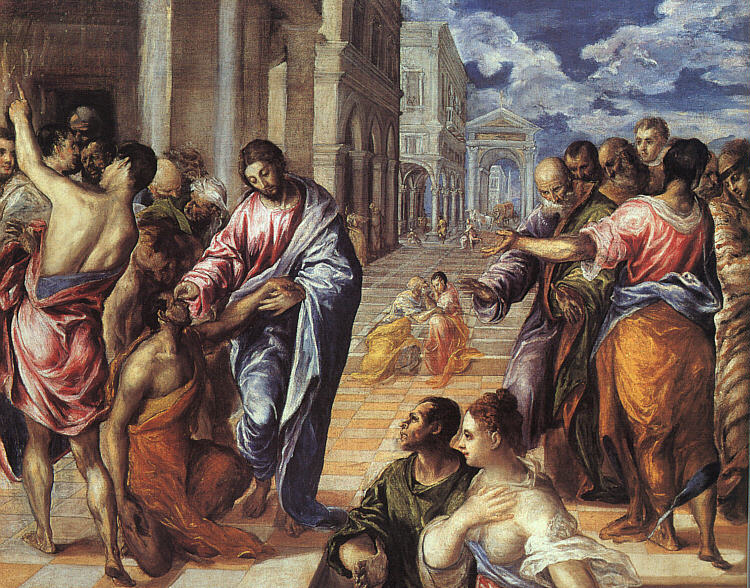
Understanding Christ

            El Greco  Christ Healing the Blind

El Greco
Christ Healing the Blind

Frequently I see myself in the Gospel passages that read something like, but they did not understand what Jesus said, its meaning was hidden from them so that they did not understand, and they were afraid to ask. 

I find comfort that the Apostles, handpicked by Jesus and great saints of the Church, struggled as I struggle to understand the meaning of Jesus’ words, and they, who traveled, ate and lived with Him on daily basis, were also sometimes timid about approaching Him. 

It took awhile before the Apostles understood that Jesus welcomed all.  He welcomed sinners and righteous alike, forgiving the sinners and commanding them to sin no more, and calling the righteous to come follow. 

We should never be afraid to approach Jesus.  If we are in sin, we should approach seeking forgiveness.  Nor, should we be afraid to answer His call to follow.  If we turn away as the rich young man did our end will be like his, sorrow and disappointment.  Those who choose to follow Him will have their eyes and ears opened.  Through faith and hope, we will see, hear and understand.  It will come, not according to our time, but His.  We must preserve.

Posted in Uncategorized | Tagged , , , , , , , , | 4 Comments

God’s World, God’s Creation

God’s World, God’s CreationFulton Sheen once asked, “What purpose did God have in mind in making this kind of world?” The Archbishop answered, “simply that God intended to construct a moral universe.”   In order to create a moral universe, God had to create man free and the master of his own fate, the caretaker of his own virtue.

Archbishop Sheen continues, God created “His subjects able to act against His will, as stars and atoms cannot, … [with the] possibility given to them to break allegiance, in order that there be meaning and glory in that allegiance they freely choose to give it.”    This is the story of Genesis, the story of Israel, the story of salvation history, and the story of each of us.

It is because of the freedom of man that evil, chaos and death entered the world.  They are bound to the freedom of man.   If man is to choose between good and evil, man must be presented with good and evil; if he is choose between love and hate, he must be presented with love and hate; and the same follows for justice and unrighteous, and life and death.  God created man with the power make himself a man of goodness, love, justice and life, or on the contrary a man of evil, hate, unrighteous and death.  God endowed each person with the freedom and power to decide the person he or she will be.

Posted in Essays, Uncategorized | Tagged , , , , , , , , , , , , , , , , , , | 8 Comments

In Defense of the Perfectly Imperfect

In Defense of the Perfectly ImperfectWhy did God create a universe governed by physical laws, yet subject to disruptive chaos; a universe of profound beauty, yet filled with grave dangers; a universe teaming with life, yet governed by death?   Why did God create man out of love yet man harbors hatred, acts unjustly, and perpetuates evil?

God could have created a universe of magnificence beauty, devoid of chaos and death and inhabited with loving men filled with justice and righteous, but He chose not to create a mechanical universe populated by humanoid robots.

Rather, He created a relatively ordered universe inhabited by persons possessing a free will.  Each person is the master of their will and the crafter of their salvation or destruction.  God created each person with the freedom to choose Him or to reject Him; to live a life with Him or a life apart from Him; to act with justice or injustice; to be righteous or to be unrighteous and evil; to dwell in the grave or to dwell beyond the grave.

Posted in Essays, Uncategorized | Tagged , , , , , , , , | 2 Comments

Mortification

MortificationThe culture of the day is mortified by the concept that a higher life can be achieved through mortification.  Christ Jesus repeatedly taught mortification.  Two examples are John 12:24-25 and Luke 9:24, respectively, “Truly, truly, I say to you, unless a grain of wheat falls into the earth and dies, it remains alone; but if it dies, it bears much fruit. He who loves his life loses it, and he who hates his life in this world will keep it for eternal life.” and “For whoever would save his life will lose it; and whoever loses his life for my sake, he will save it.” Others include Luke 14:26, Mark 9:42-47, and Matthew 7:13-14, 11:12 and 16:24.

Mortification is a fundamental law of nature, dismissed by the culture of our time.  Mortification consists of dying to live, a seed must die to become a plant, man and woman die to self to become one in marriage, plants and animals die to be food for others, sperm and egg die to create a new life, and so forth.

For a Christian, mortification means dying to self, surrendering our lower life, our sinfulness for a higher life, a life lived for the love of God, a life yoked to Jesus Christ, a life lived in communion with the Holy Spirit.

Posted in Essays, Meditations On Biblical Verses, Uncategorized | Leave a comment

How to Hear

How to Hear“Take care how you hear” (Luke 8:18) is a rather odd warning put forth by Jesus.  “Take care who you hear” or “take care what you hear” would seem more pertinent.

Why is Jesus more concerned with how we hear, than who or what we hear?  Because, whoever or whatever we hear we must hear in faith.  Christ wants us to take care to hear in faith.

Little makes sense when heard without faith.  Those who heard Christ with faithless ears did not hear the truth he spoke, the mercy he preached, or the charity he taught.  Those who hear with ears of the world, ears that lack faith, do not hear the truth that His Church teaches, or the mercy and forgiveness she preaches, or the love she speaks with.   Take care how you hear.  Take care to hear in faith.

Posted in Essays, Meditations On Biblical Verses, Uncategorized | Tagged , , , , , , , , , , | 2 Comments

Simply Love God

Simply Love GodWhen asked the question, “What can I do to acquire the love of God?” Saint Francis De Sales replied, “By willing to love Him.”   He further cautioned against fretting about how to approach God and acquire His love since it provides little time for approaching God.  What God desires is that we show our willingness to love Him by placing ourselves in His presence and continually applying our mind to Him. Saint Francis warned that it is a mistake to believe that if a feeling of being in God’s presence is not felt, than one is not in His presence.  God’s love is acquired by continually placing ourselves in His presence.   Being in His presence is the better portion.

Posted in Uncategorized | Tagged , , , , , , , | 4 Comments