Rome Pilgrimage – Churches of Rome

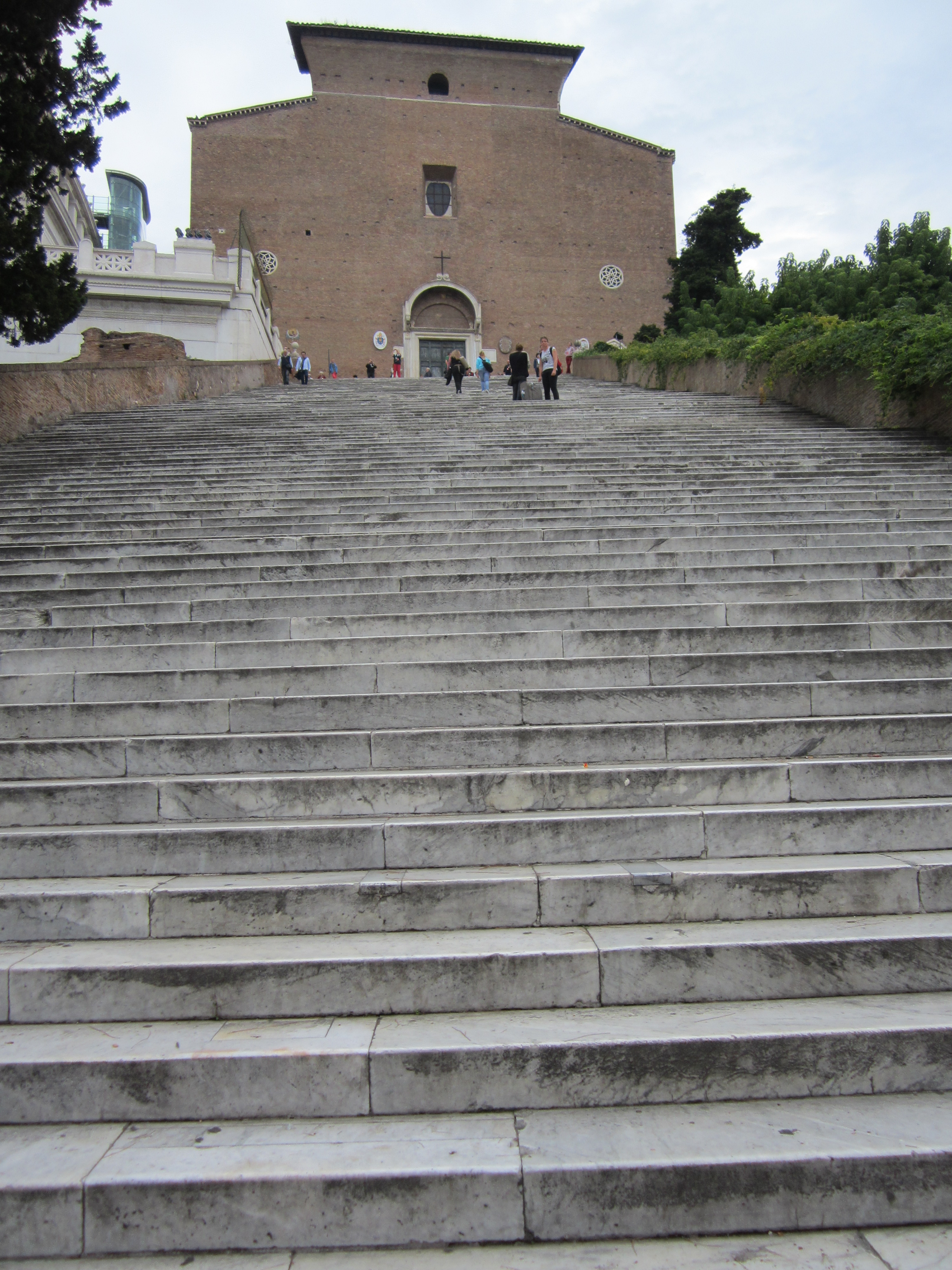
Looking Up the Steps to Santa Maria Ara Coeli

Looking Up the Steps to Santa Maria Ara Coeli

Basilica of Santa Maria Ara Coeli, a church we celebrated Mass at, is located on the Capitoline Hill.  According to tradition, the Blessed Virgin Mary holding the Christ Child appeared to Augustus Caesar on Capitoline Hill.  The vision of the Blessed Mother with the Christ Child corresponded to a message Augustus Caesar received from the oracle of the Tiburtine Sybil that a Hebrew Child would silence the oracles of the Roman Gods.   Augustus Caesar build on the site of vision an altar in honor of the child.  The altar was named, “Altar of the Firstborn of God” (Ara Primogeniti Dei).   Constantine replaced the altar of August Caesar with the Basilica Church of Santa Maria Ara Coeli (Basilica of Saint Mary of the Altar of Heaven).

Santa Maria Coeli - Main Altar

Santa Maria Coeli – Main Altar

Saints Peter and Paul at Mamertine Prison

Saints Peter and Paul at Mamertine Prison


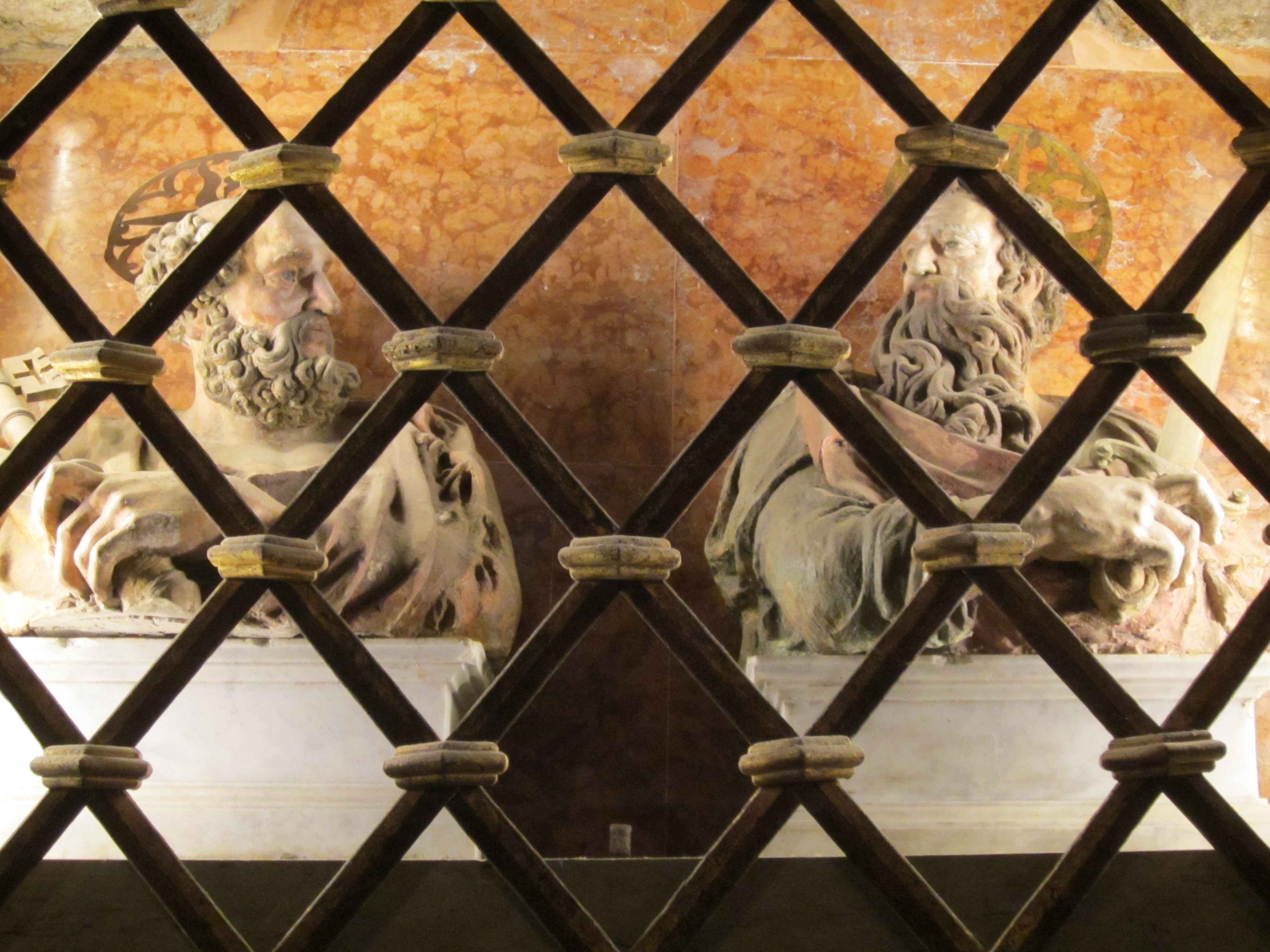
We also visited the Mamertine Prison were Saints Peter and Paul were held before being martyred.  Their cell was a small cavern hewed in the rock, the cavern was about six feet tall and ten feet in diameter and contained a pillar that they were chained to.  The entrance to the cell was a four feet diameter hole in the ceiling.  Prisoners were lowered by rope or thrown through this hole in the cell; the drop from the floor above to the floor of the cell was about twenty feet.  The cell also contained a small spring of water.   According to tradition, Saint Peter baptized fellow prisoners and many of their guards with the waters of that small spring.

Prison Cell, Water Spring and Poll

Prison Cell, Water Spring and Poll


Basilica Saint John Lateran

Basilica Saint John Lateran

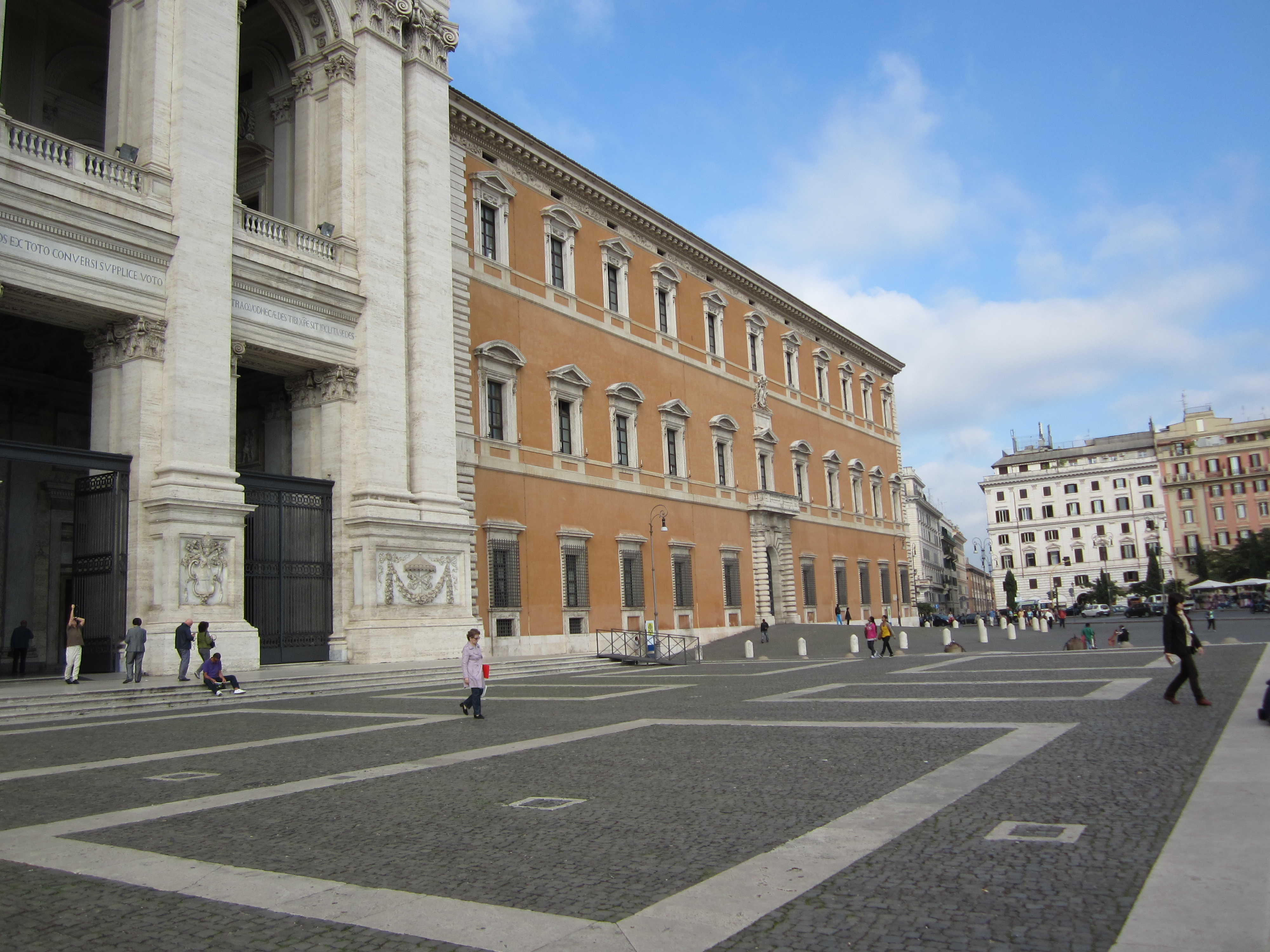
The Basilica of Saint John Lateran (the Cathedral Church of Rome) is named after the Lateran family who owned the land and Saints John the Evangelist and John the Baptist.  The Basilica abuts the Lateran Palace, the official residence of the Pope from about 400 to about 1400.   The Palace is now the residence of the Cardinal Vicar of Rome, who administers for the Pope the daily activities of Diocese of Rome.   A few blocks down the street from the Basilica of Saint John Lateran is Santa Croce, a beautiful church containing many relics from the passion of Jesus Christ.
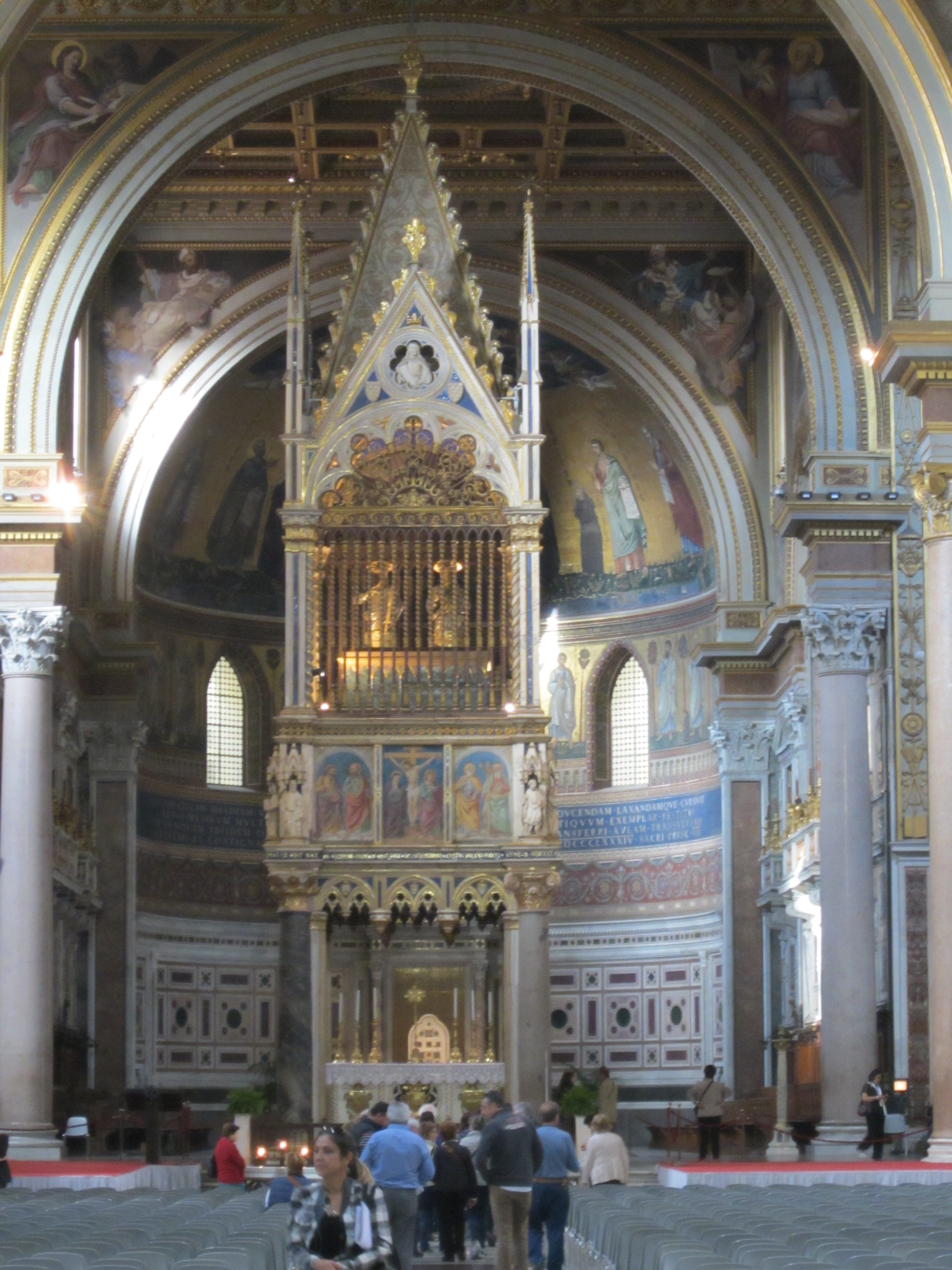
Main Altar of Basilica Saint John Lateran
Main Altar of Basilica Saint John Lateran

Lateran Palace

Lateran Palace


Posted in Essays, Pilgrimage | Tagged , , , , , , , , , , , , , , , , , , , , , , , , | 2 Comments

Rome Pilgrimage – Assisi and the Vatican

Basilica of Santa Maria degli Angeli -- the Basilica is build around the church St. Francis repaired and lived in

Basilica of Santa Maria degli Angeli — the Basilica is build around the church St. Francis repaired and lived in

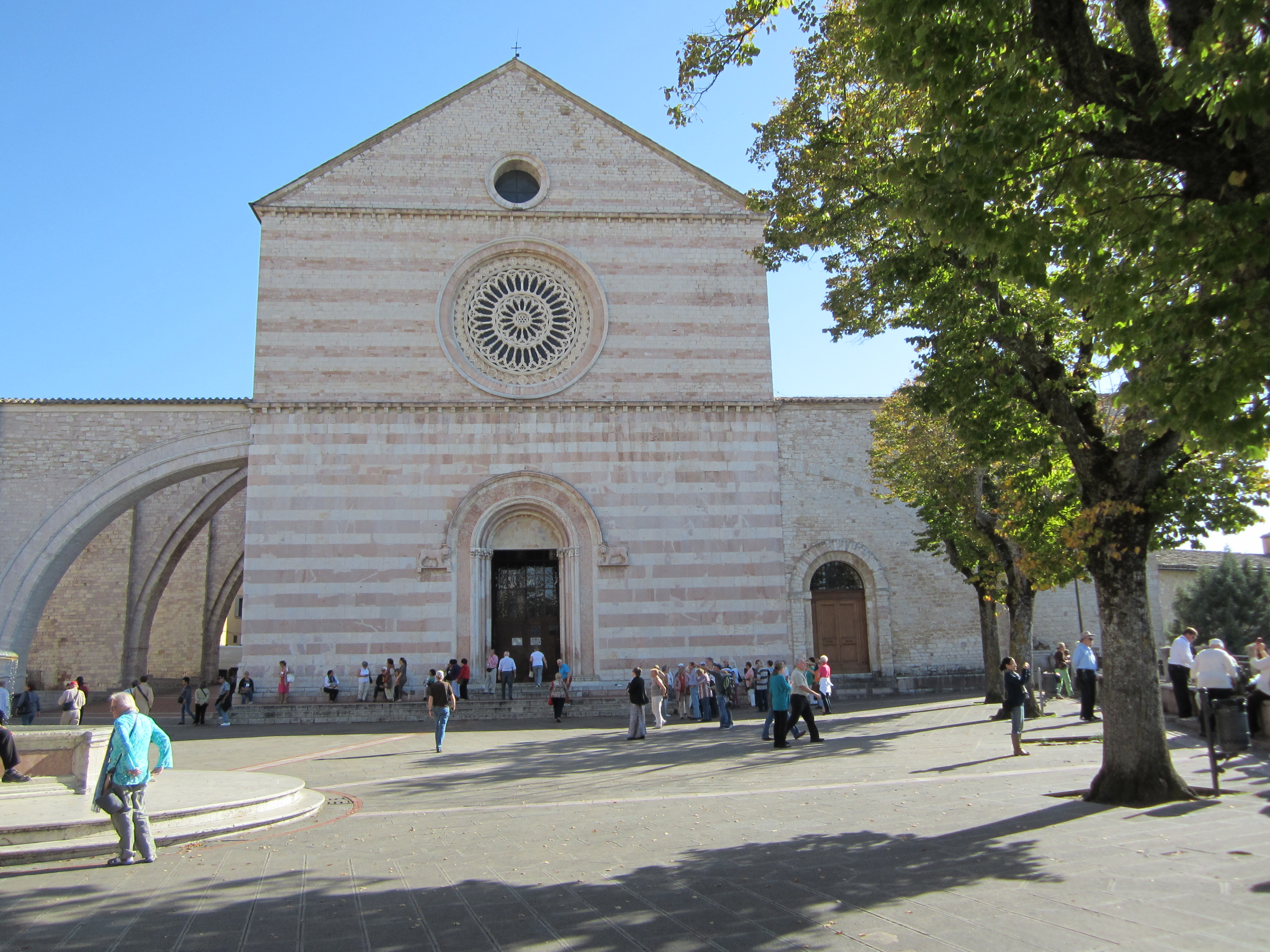
Tuesday and Wednesday were long days.  We traveled to Assisi on Tuesday (departed our Hotel at 7 AM and returned to our Hotel after 11 PM).   Assisi is a beautiful town.  We were not permitted to photograph the interior of the Churches.  We visited the church St. Francis repaired and lived at and the churches were St. Clare and St. Francis are entombed, respectively.

Wednesday was another long day.  We departed the hotel at 7:30 AM for Pope Francis’ general Wednesday audience.  St. Peter’s square was crowded over 140,000 people jammed St. Peter’s Square.  We were, however, able to see Pope Francis pass by in his Pope-mobile and could see him seated.  After the Papal audience, we toured the Vatican Museum and attended mass in St. Peter’s.   I was blessed to be able to sit during mass to next to the papal altar, immediately next to the burial site of St. Paul.

Our View of Pope Francis' General Audience

Our View of Pope Francis’ General Audience

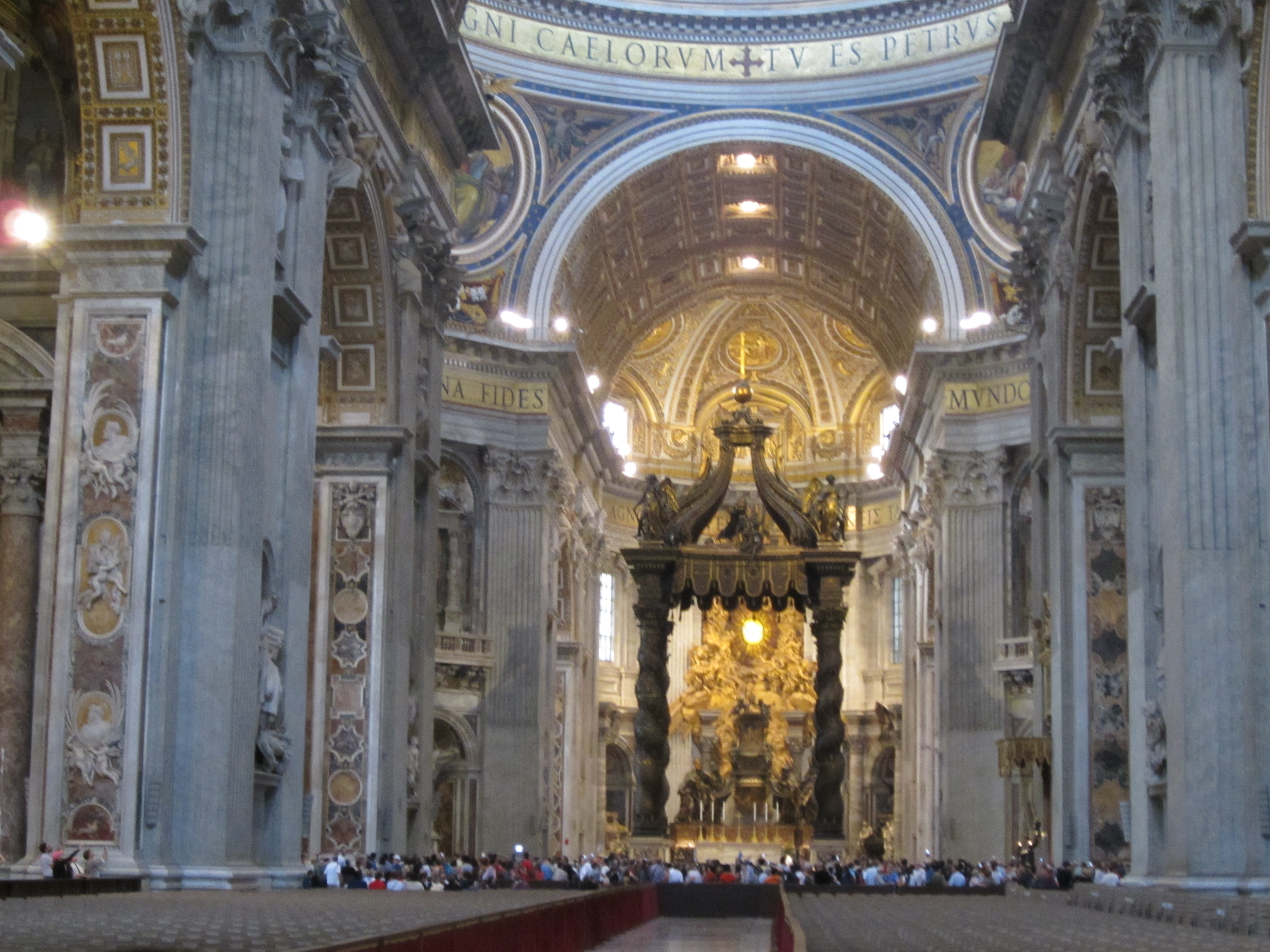
Main Altar in St. Peter's

Main Altar in St. Peter’s


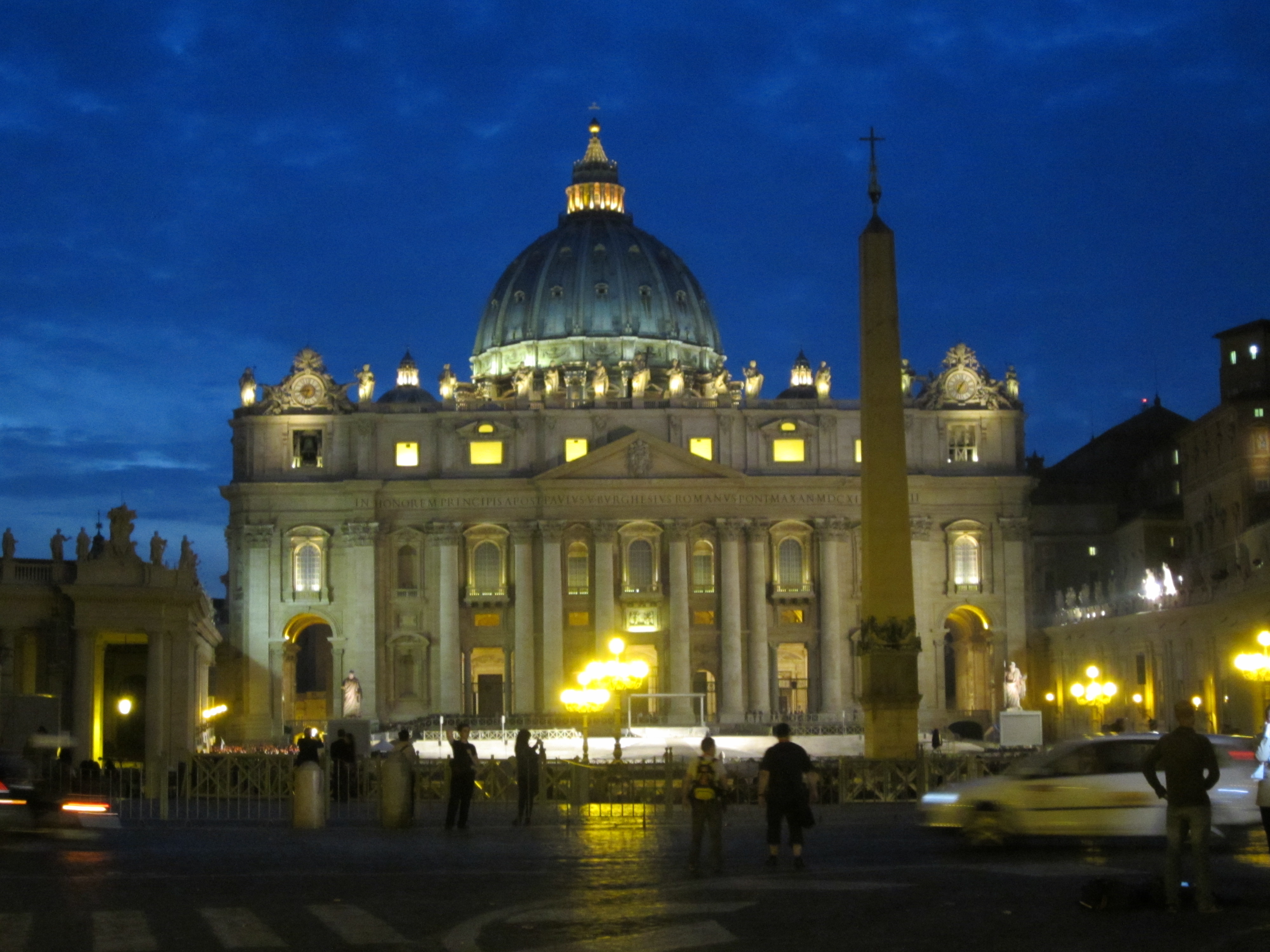
Saint Peter's at Night

Saint Peter’s at Night


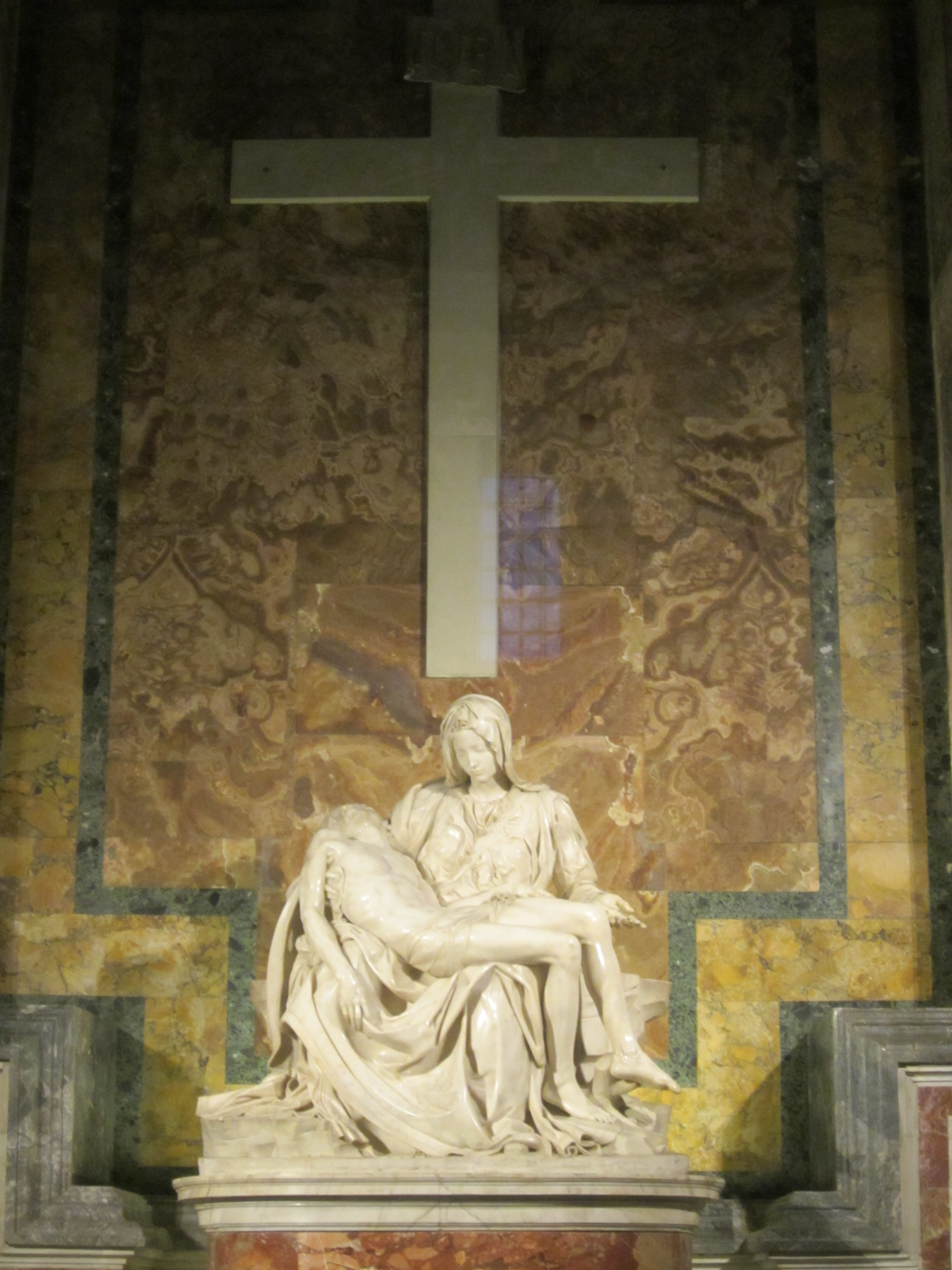
Pieta

Pieta

Basilica of Saint Clare - where St. Clare is entombed

Basilica of Saint Clare – where St. Clare is entombed

Papal Basilica of St. Francis of Assisi - upper level where St.Francis is entombed

Papal Basilica of St. Francis of Assisi – upper level where St.Francis is entombed

Basilica of St. Francis of Assisi Lower Level

Basilica of St. Francis of Assisi Lower Level

Church of San Pietro (Assisi)

Church of San Pietro (Assisi)

Posted in Essays, Pilgrimage | 3 Comments

Rome Pilgrimage – Three Interesting Churches

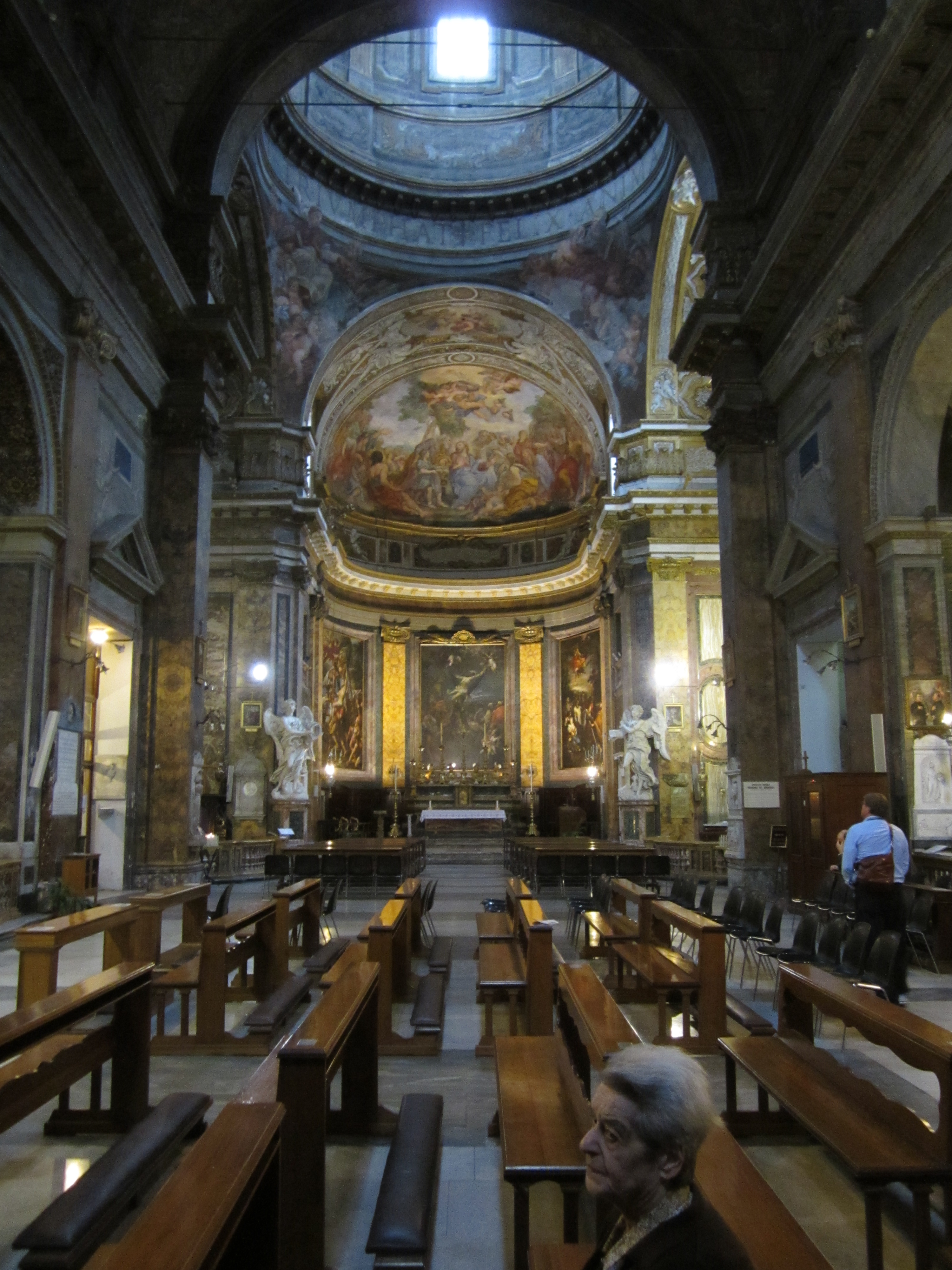
Santa Andrea delle Fratte

Santa Andrea delle Fratte

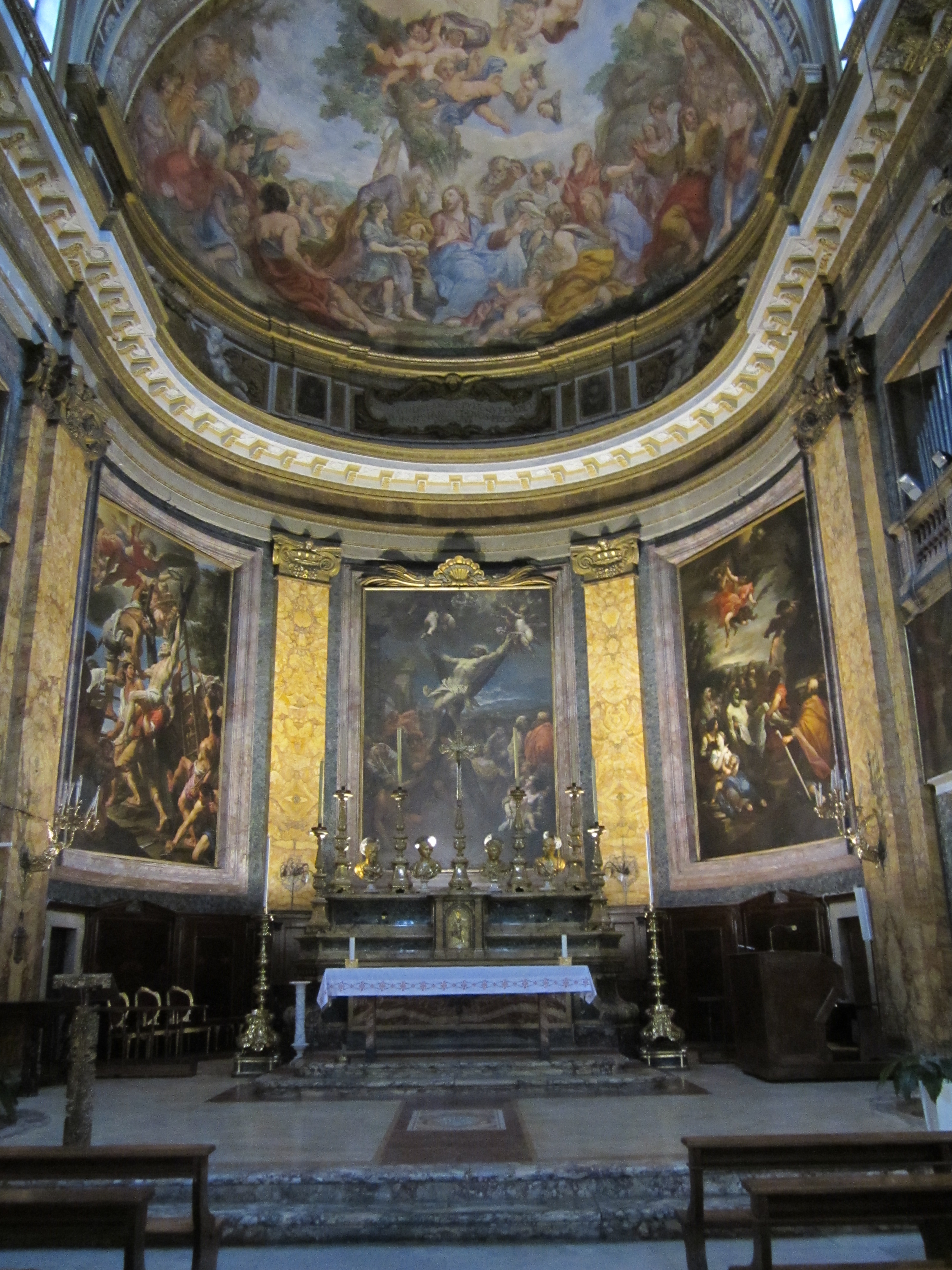
Santa Andrea delle Fratte is located in central Rome.  St. Maximilian Kolbe said his first mass in this beautiful Basilica.   Santa Andrea delle Fratte is also know for the appearance of Our Blessed

Santa Andrea delle Fratte  Main Altar

Santa Andrea delle Fratte Main Altar

Mother to Guesta Cappella (an avowed atheist) and his immediate and miraculous conversion to Catholicism (the Blessed Mother instilled a complete knowledge and understanding of the Catechism of Catholic Church in Guesta Cappella).

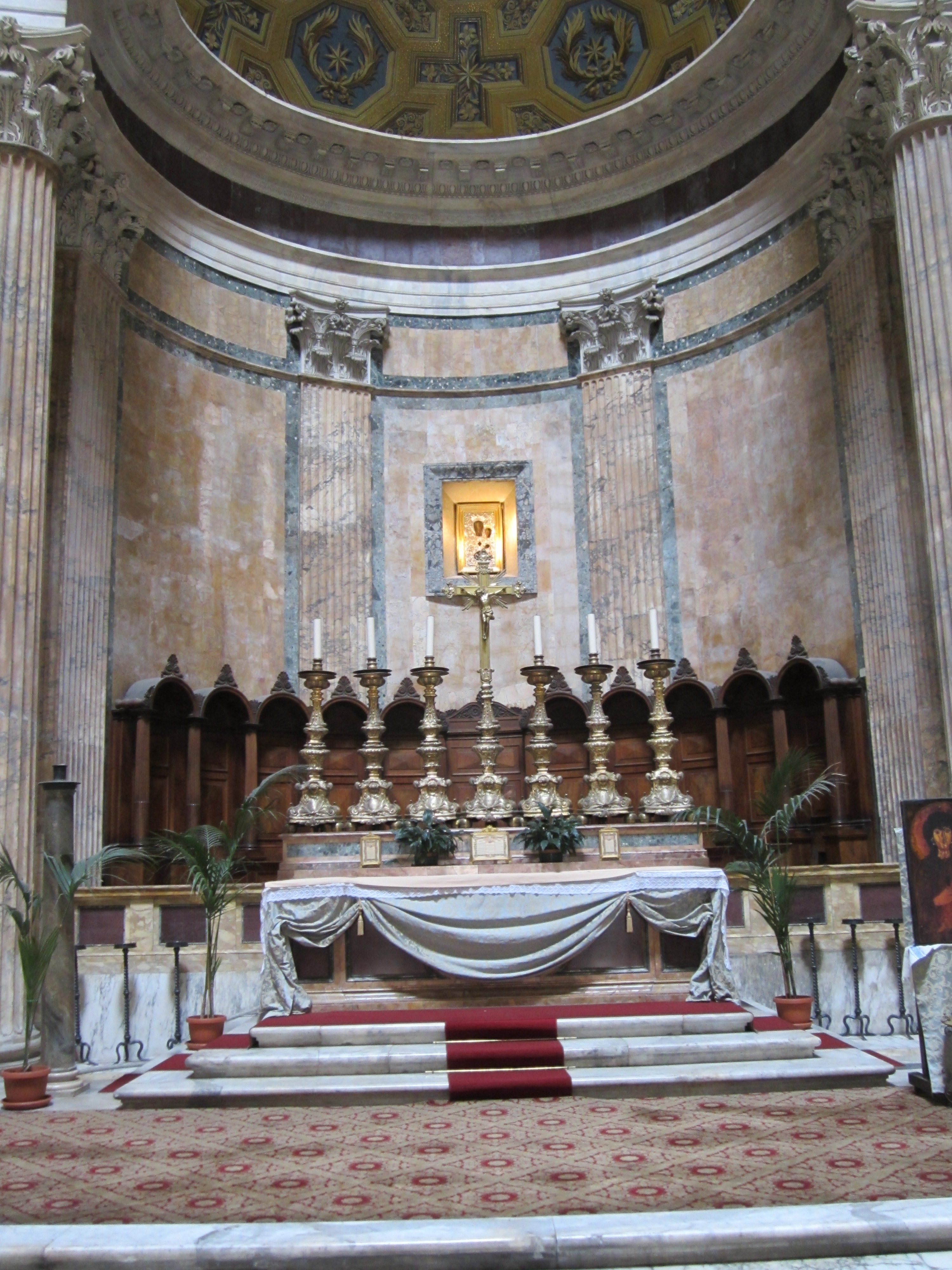
Pantheon Main Altar

Pantheon Main Altar

The Pantheon in Rome was originally built as a temple to all gods around 30 BC.  Around the year 600 AD the pantheon was give to the Church and consecrated as Sancta Maria ad Martyres.  The Pantheon was the first pagan temple to be consecrated as a Christian Church.  Pope Boniface had 28 carloads of martyrs’ remains entombed in the Pantheon.


Santa Maria sopra Minerva

Santa Maria sopra Minerva

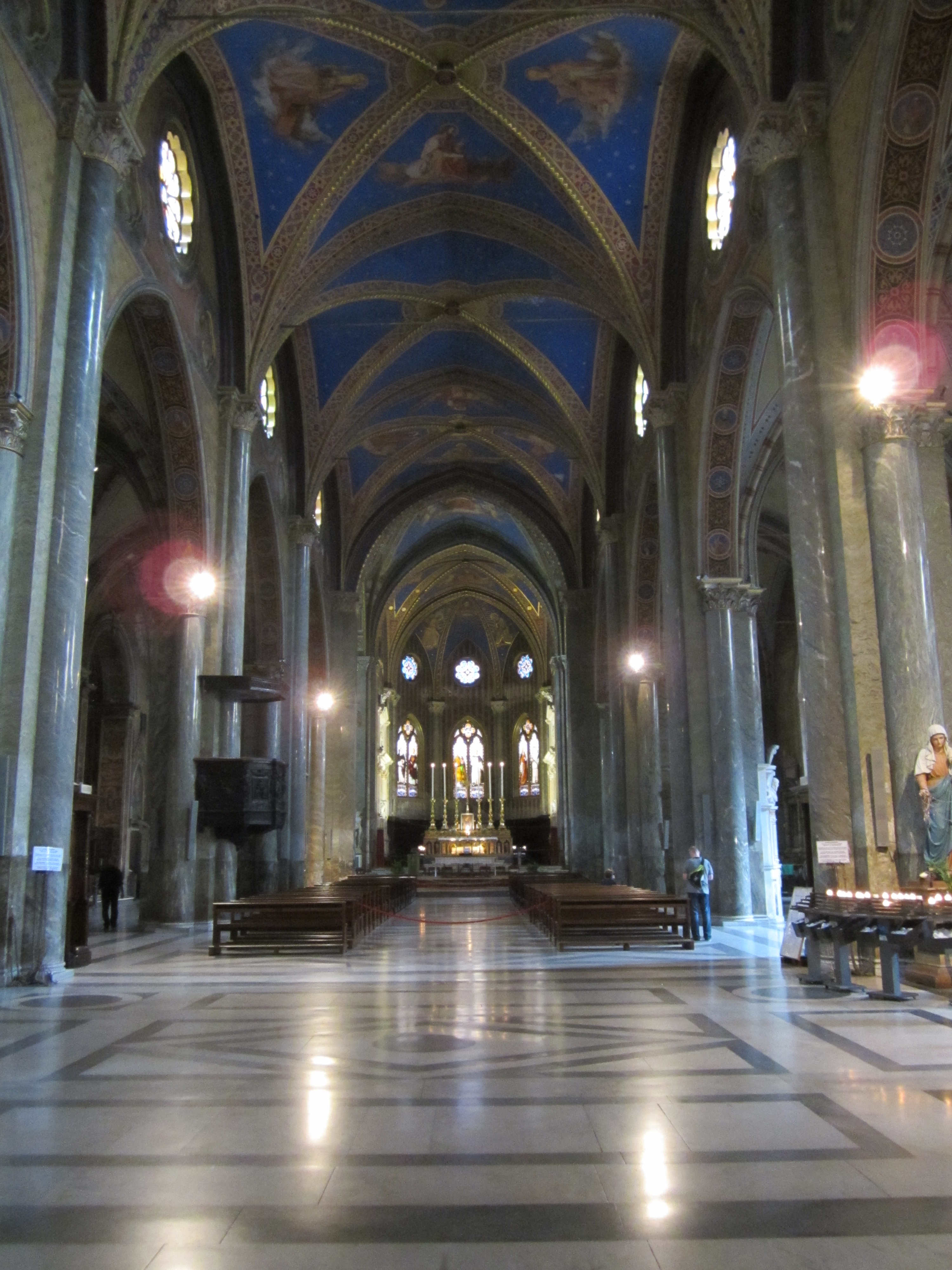
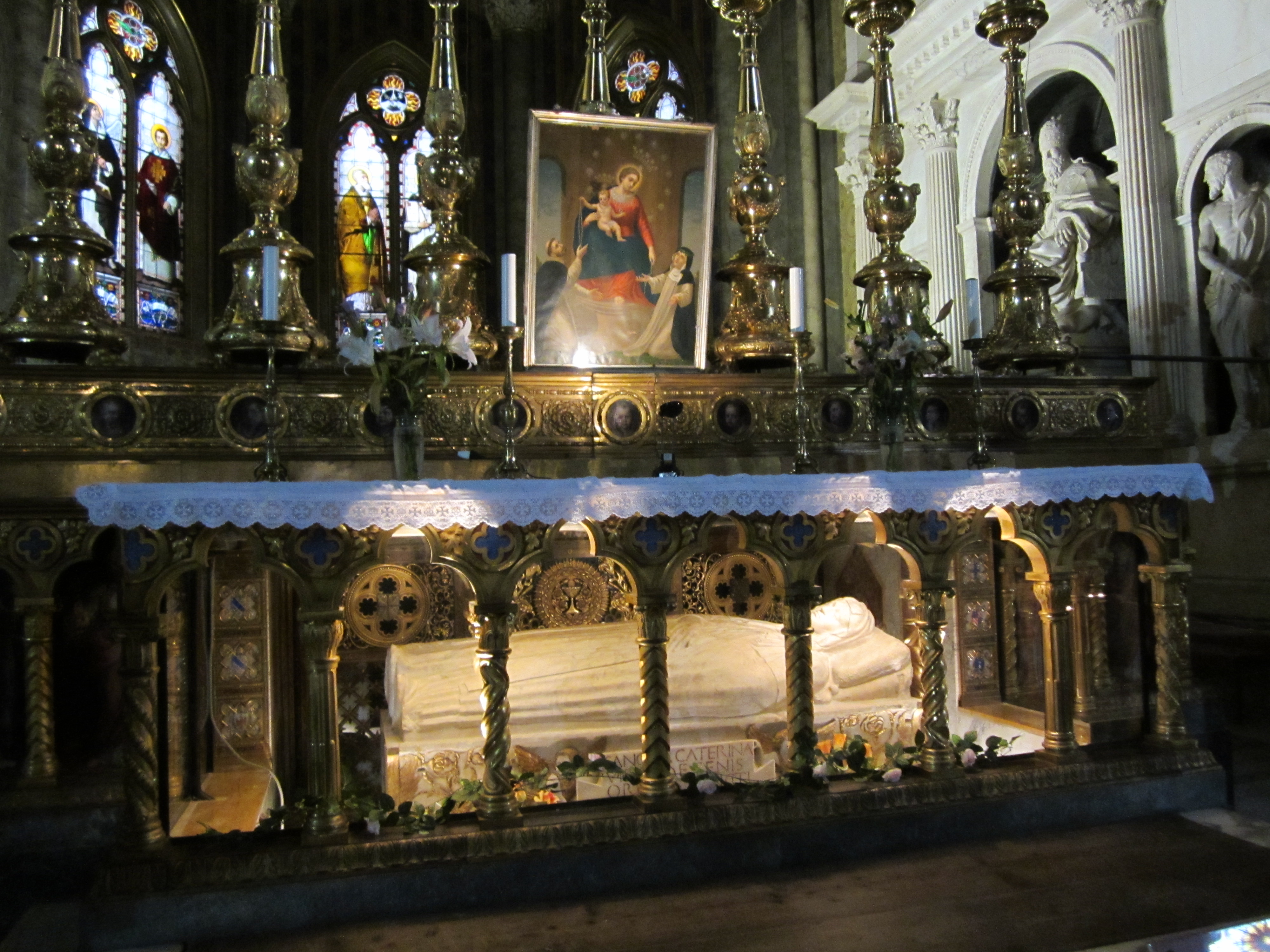
We celebrated Mass today in Santa Maria sopra Minerva, where St. Catherine of Siena is buried.  Santa Maria sopra Minerva is the only baroque Church in Rome.

Saint Catherine of Siena's Tomb -- Santa Maria sopra Minerva

Saint Catherine of Siena’s Tomb — Santa Maria sopra Minerva

Posted in Pilgrimage | Tagged , , , , , , , , , , , , , , , , | 2 Comments

Rome Pilgrimage – Sunday Angelus and Catacombs

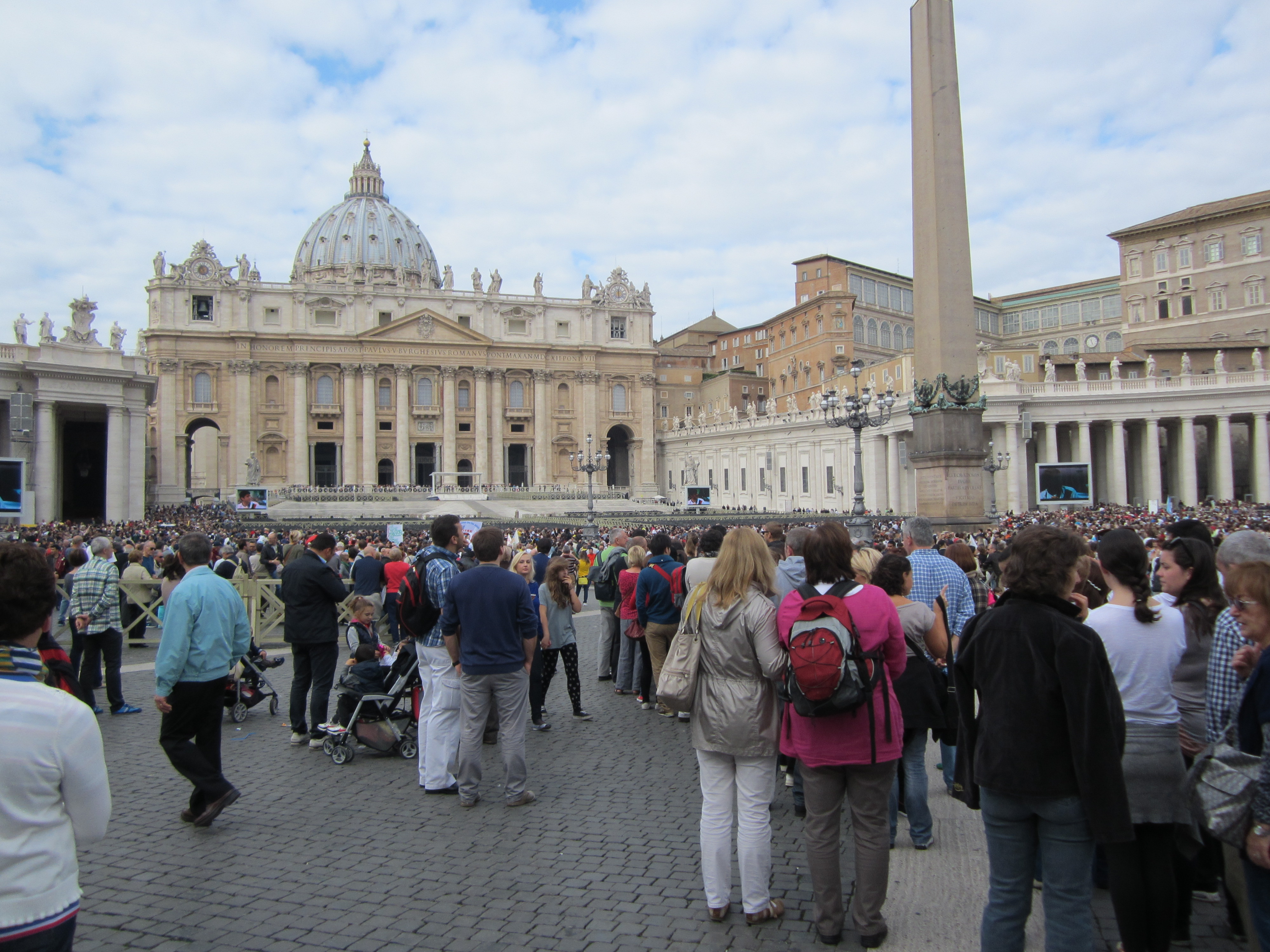
St. Peter's Square waiting for the Sunday Angelus of Pope Francis

St. Peter’s Square waiting for the Sunday Angelus of Pope Francis

Our day started at Saint Peter’s Square with the Sunday Angelus of Pope Francis.  The square was filled with tens of thousands of people.  Pope Francis spoke of the need to “pray always, without growing weary.”  The readers of my blog were in my heart when I received the Papal blessing.

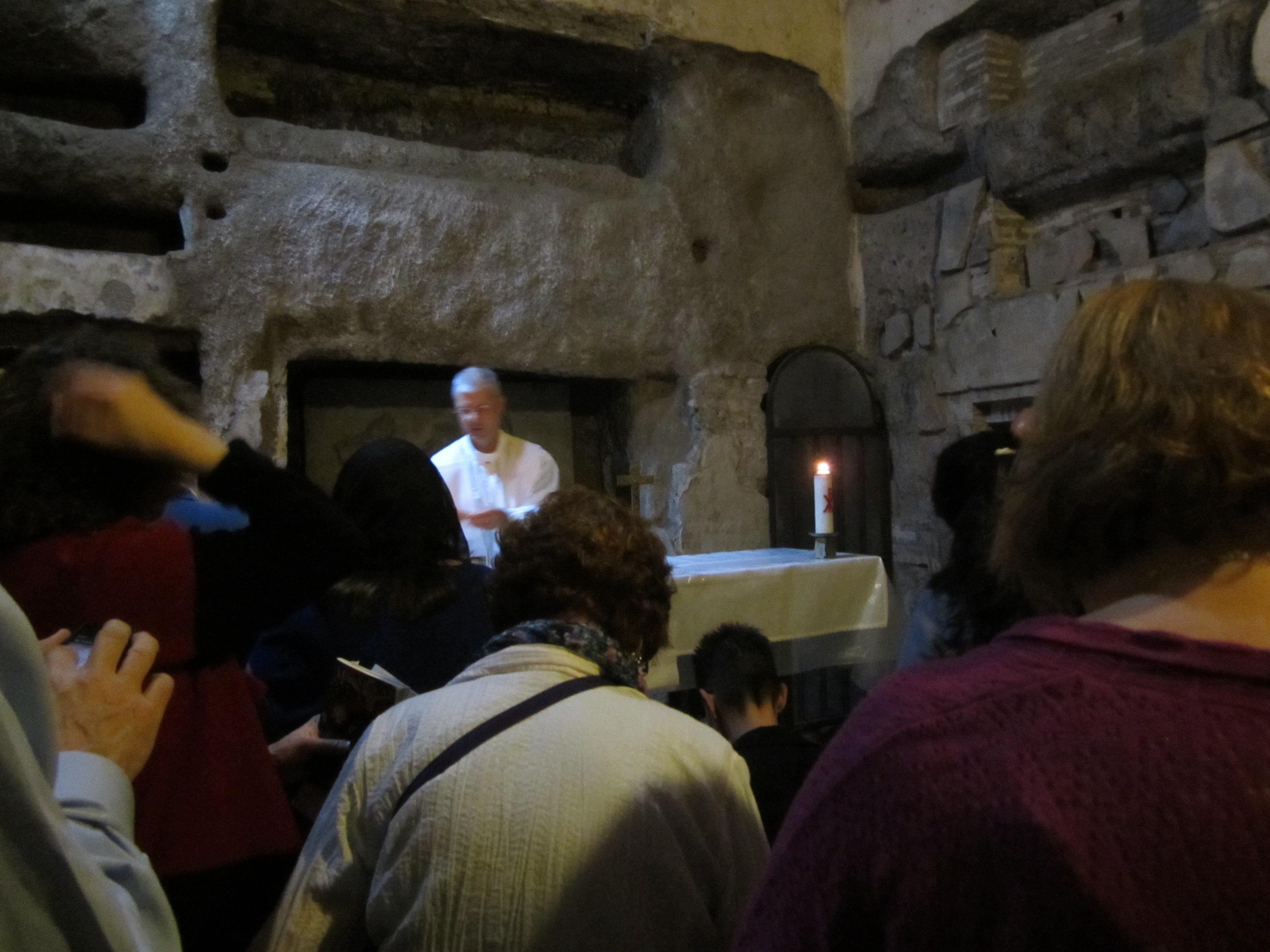
After the Angelus we journeyed to the Catacombs of San Callisto, the largest of the sixty Roman catacombs and burial site of over 1.5 million Christians.   San Callisto stands on the Appian Way.  Sixteen popes and St. Cecilla were buried at San Callisto (their bodies were removed from the catacombs before the sacking of Rome by the barbarians and entombed in various churches in Rome).  We celebrated Mass in the catacombs.

Father preparing for mass in Catacombs of San Callisto

Father preparing for mass in Catacombs of San Callisto

After mass we visited the site in the San Callisto catacombs were Pope St. Sixtus II and several deacons were dragged away from the altar while celebrating mass and martyred.  As I prayed in the catacombs, I thought about the challenges those who were buried San Callisto faced in practicing their faith.  I prayed to have the perseverance they had when facing similar challenges.  I prayed to preserve in charity, with faith and hope in Christ Jesus.
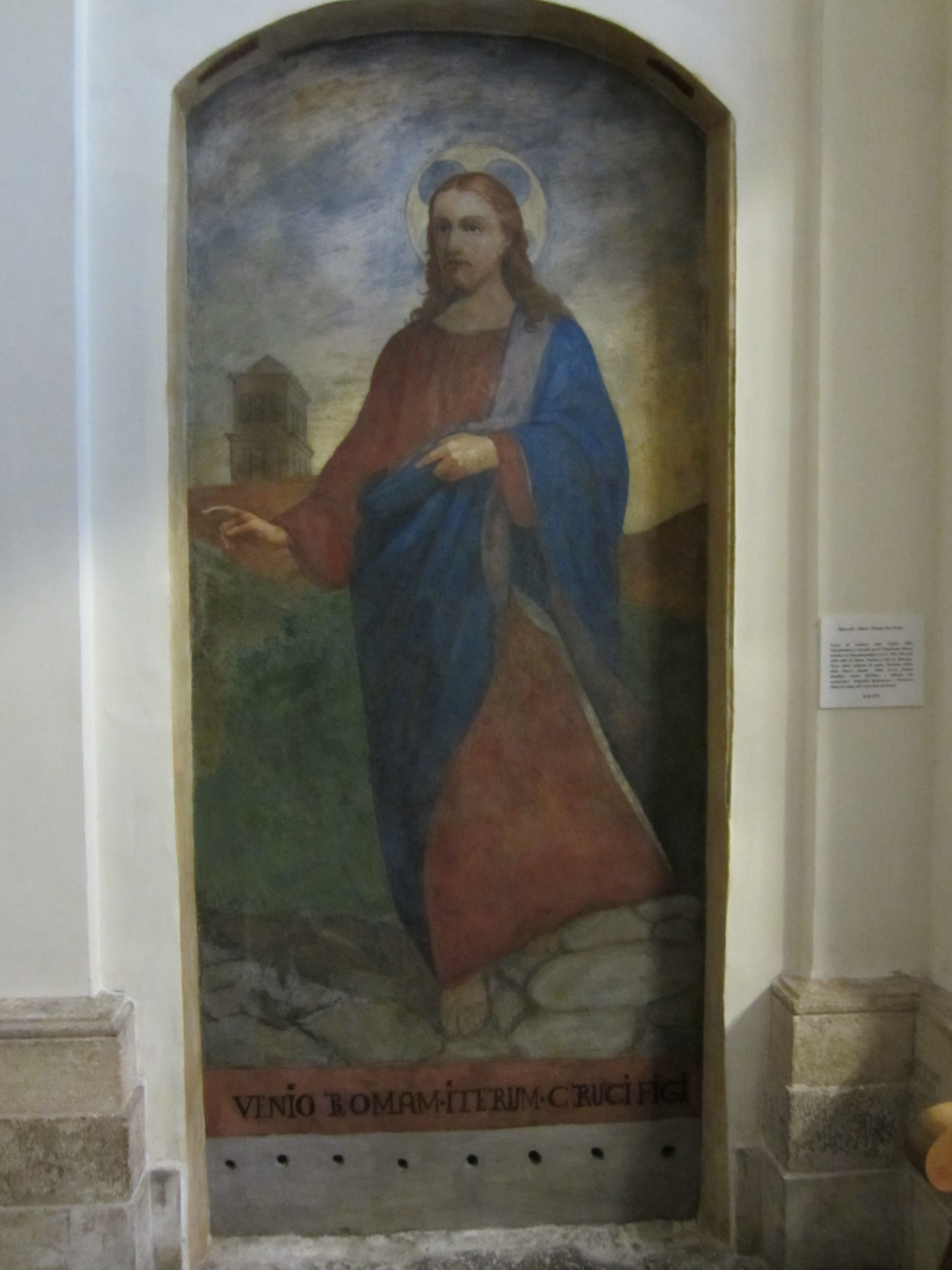
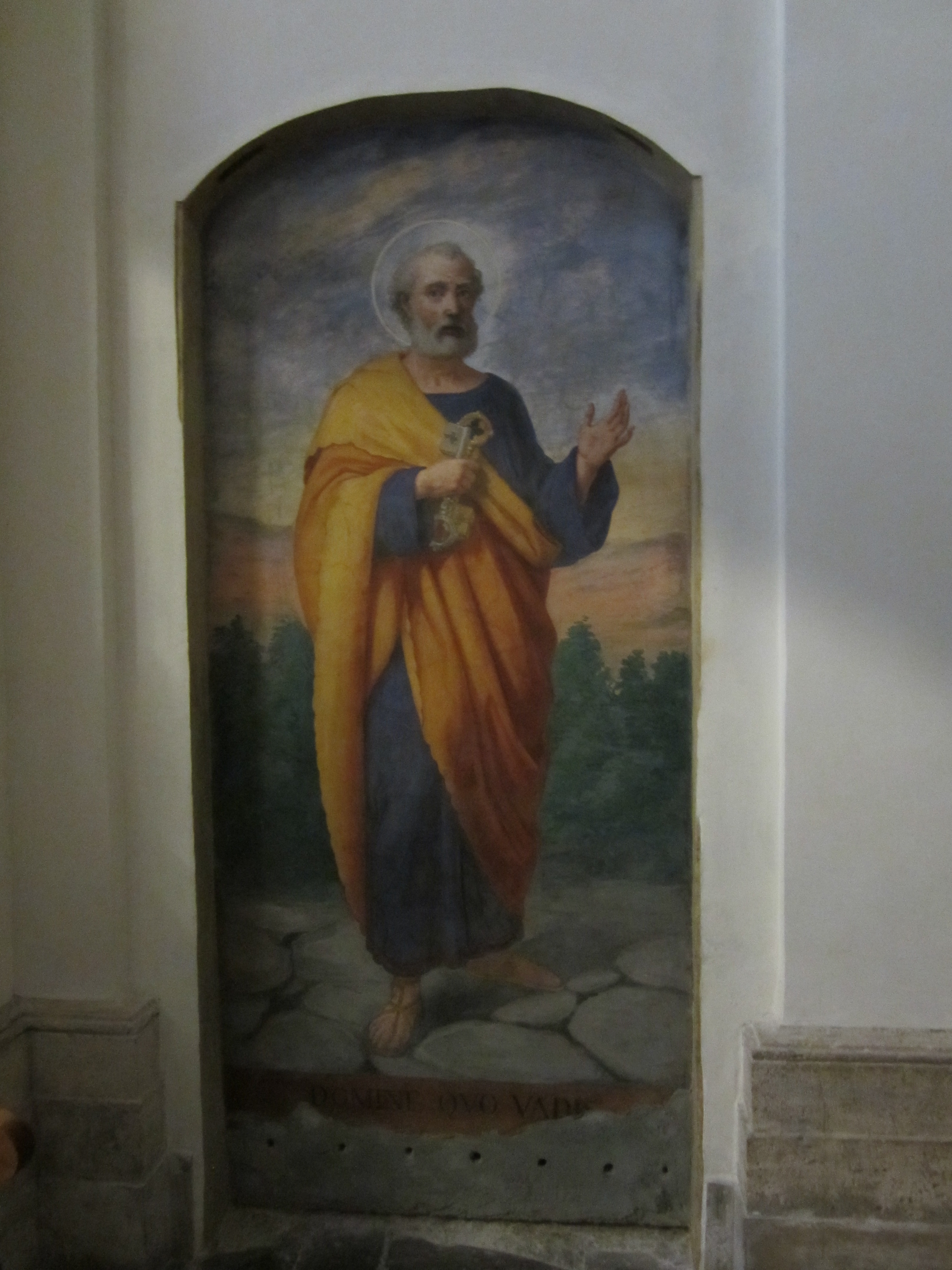
We ended the day at the Church “Domine Quo Vadis?”   The Church is built on the site where it is believed that St. Peter, when fleeing Rome, encounters Jesus on the Appian Way and asks Jesus “Domine quo vadis?” (“Where are you going?”).  Jesus replies to Peter, “Romam vado iterum crucifig!” (“I am going to Rome to be crucified again?”).   While at the church, I prayed for the courage to follow Christ, for God always provides what is best for us, we only need follow in faith.

Jesus Christ  on Appian Way in Church "Domine Que Vadis?"

Jesus Christ on Appian Way in Church “Domine Que Vadis?”

St. Peter on Appian Way in Church "Domine Que Vadis?"

St. Peter on Appian Way in Church “Domine Que Vadis?”


Posted in Uncategorized | Tagged , , , , , , , , , , , , , , , , , , , , , , | 4 Comments

Rome Pilgrimage – St. Paul

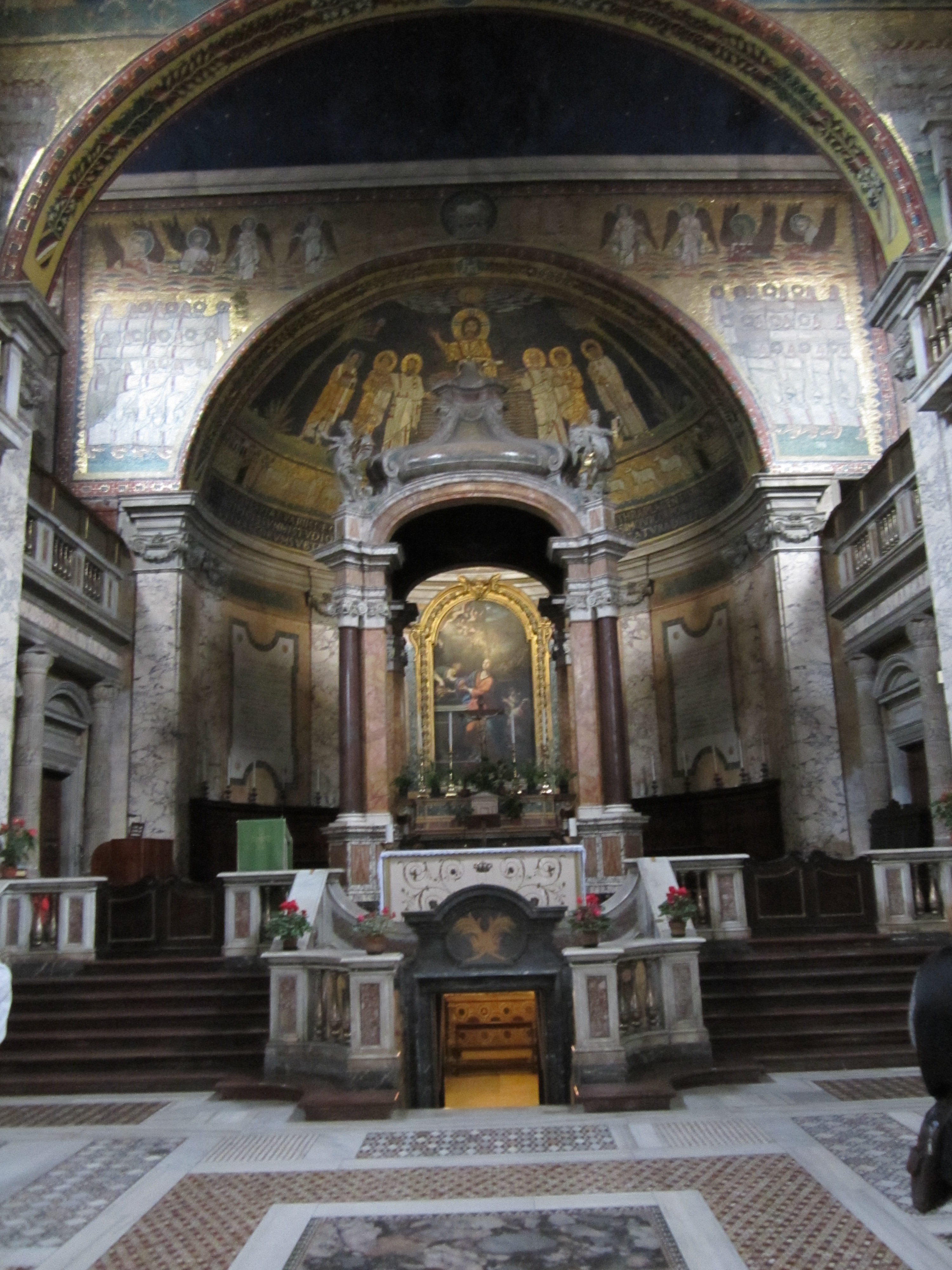
Main Altar of Basilica Santa Prassede with crypt containing remains of Saints Prassede and Pudenzianna  below altar

Main Altar of Basilica Santa Prassede with crypt containing remains of Saints Prassede and Pudenzianna below altar

Today our pilgrimage brought us to Roman churches associated with St. Paul.  In the morning we visited the Basilicas of Santa Prassede and Santa Pudenziana.  These basilicas are decided to the two daughters of Pudens (2 Timothy 4:21).   Pudens was an influential Roman citizen, who was baptized by St. Peter.  Pudens, believed to be a Roman Senator, would open this home to St. Paul when Paul was in Rome.   Prudens’ two daughters, Prassede and Pudenziana were martyred for burying the dead bodies of Christians killed by the Roman authorities. We celebrated mass today at the Basilica of Santa Prassede.

Mosaic of Christ in side Altar in Basilica Santa Prassede

Mosaic of Christ in side Altar in Basilica Santa Prassede

Mosaic on Ceiling of Side Altar in Santa Prassede

Mosaic on Ceiling of Side Altar in Santa Prassede

Basilica Santa Pudenziana

Basilica Santa Pudenziana

Main Altar Santa Pudenziana

Main Altar Santa Pudenziana

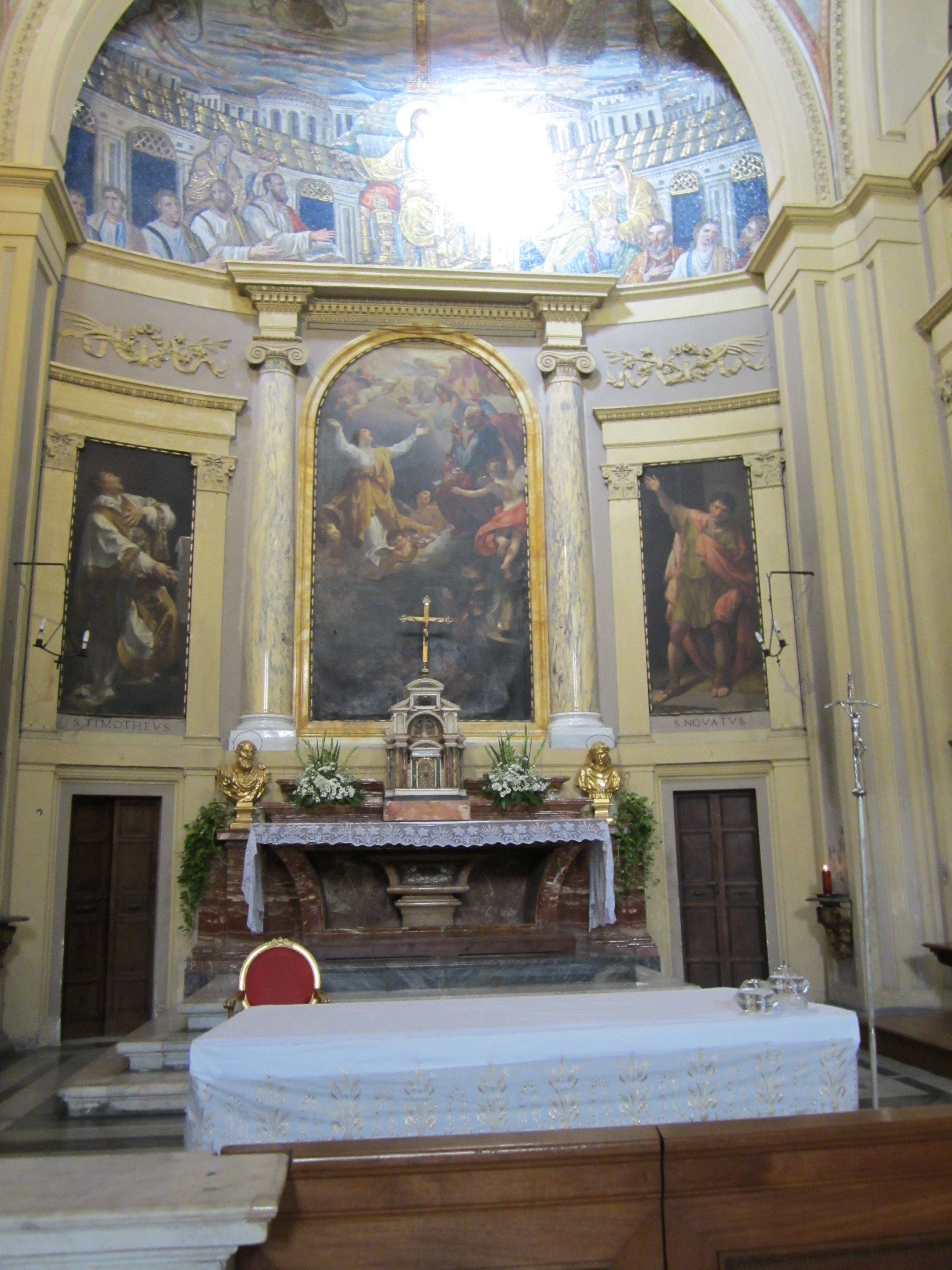
Side Altar Santa Pudenziana -- Altar Contains Fragment of Wooden Altar St Peter Celebrated Mass on in Pudens House Church

Side Altar Santa Pudenziana — Altar Contains Fragment of Wooden Altar St Peter Celebrated Mass on in Pudens House Church


In the afternoon we visited Abbazia delle Tre Fontane (where St. Paul was imprisoned and martyred by beheading), and Papal Basilica St. Paul Outside-the-Walls (where St. Paul is buried).

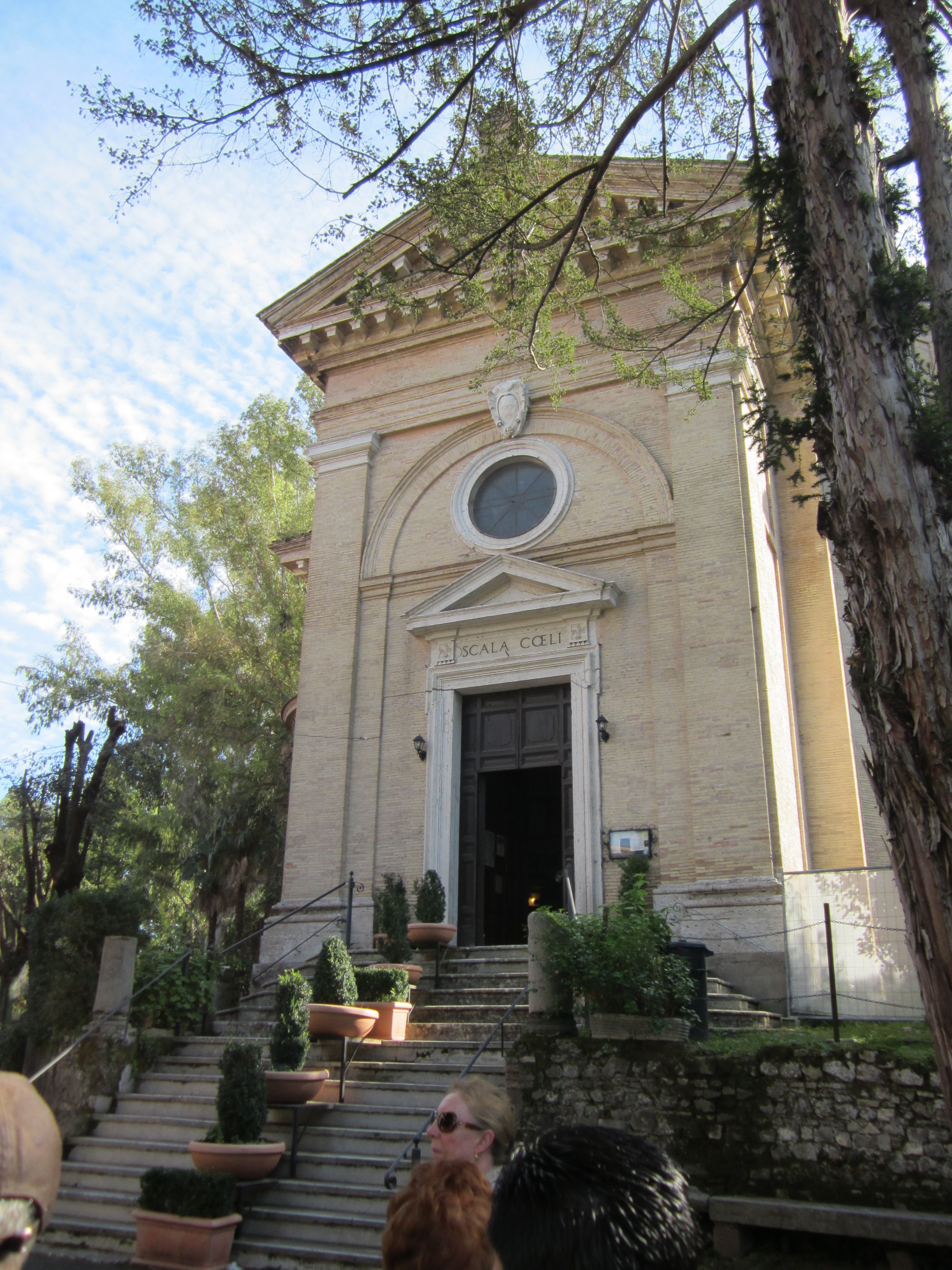
Scala Coeli - Church built over cell where St. Paul was  held before being beheaded.

Scala Coeli – Church built over cell where St. Paul was held before being beheaded.

St. Paul's Holding Cell

St. Paul’s Holding Cell

St Paul Outside-the-Walls -- Church built over the tomb of St. Paul

St Paul Outside-the-Walls — Church built over the tomb of St. Paul

Looking towards the main altar of St. Paul Outside-the-Walls

Looking towards the main altar of St. Paul Outside-the-Walls

The tomb of St. Paul

The tomb of St. Paul

Posted in Essays, Pilgrimage | Tagged , , , , , , , , , , , , , | 4 Comments

Rome Pilgrimage

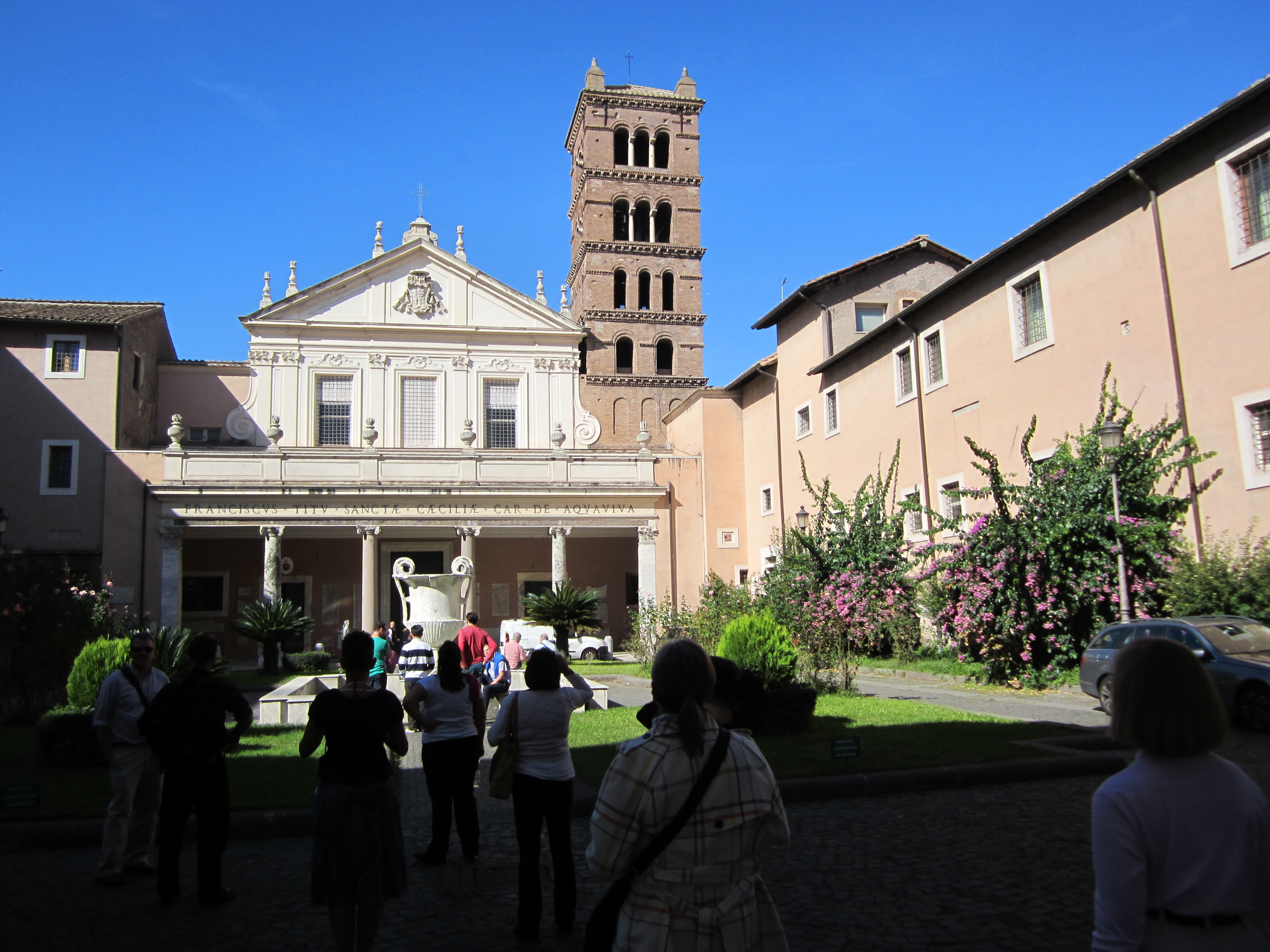
Courtyard leading into Church

Courtyard leading into Church

My blogs for the next week will feature some of the churches I am visiting on a pilgrimage to Rome.

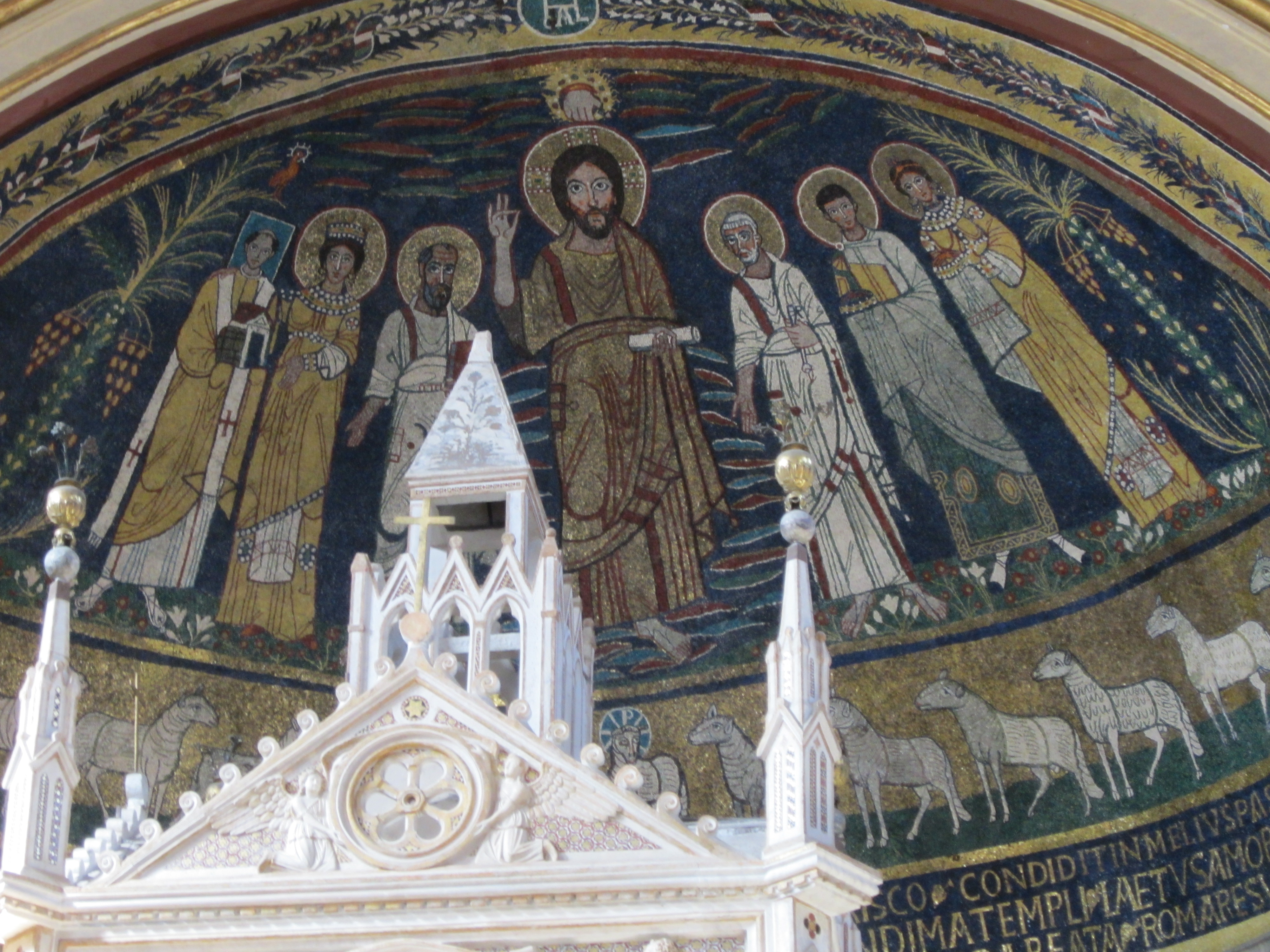
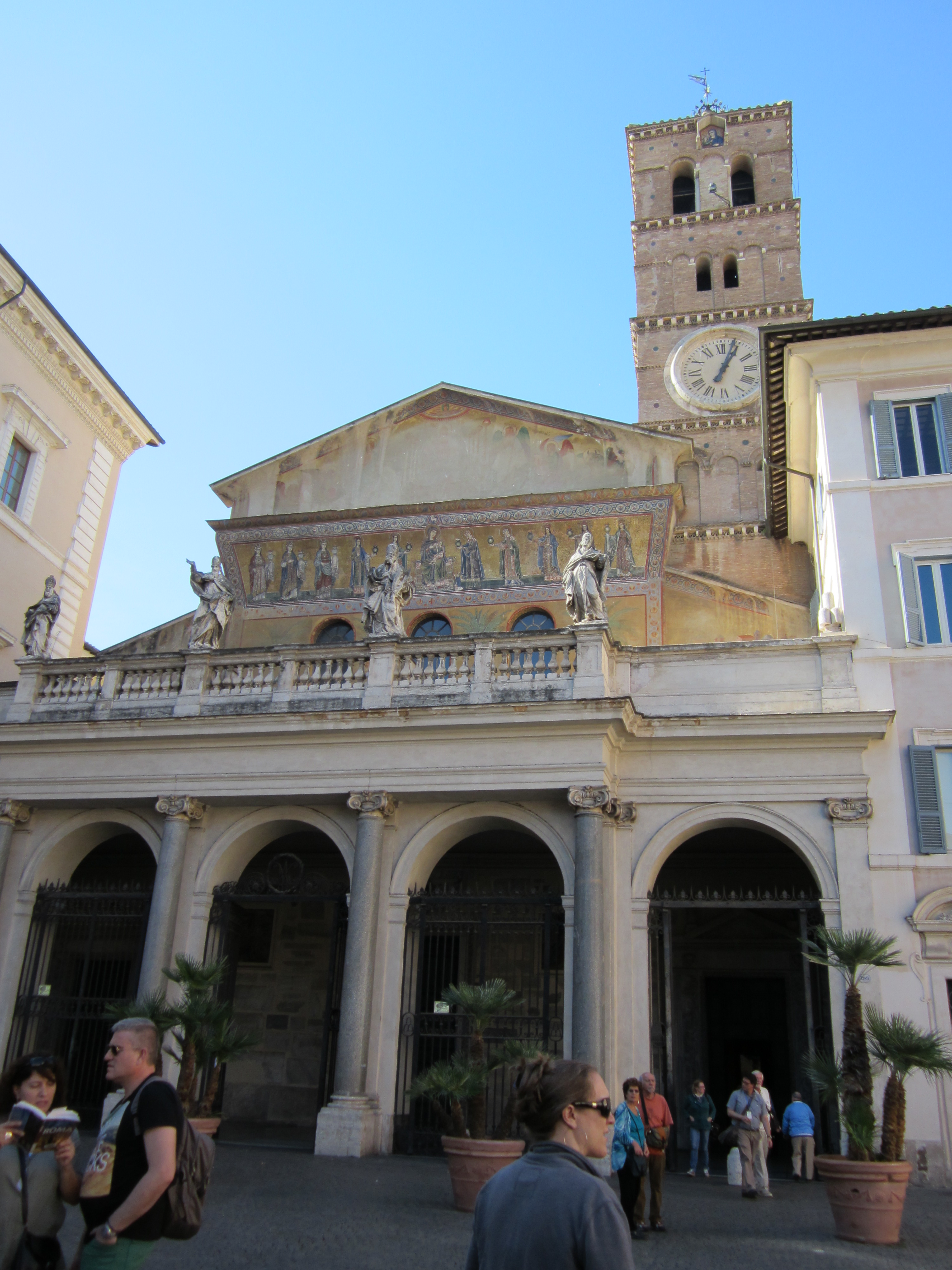
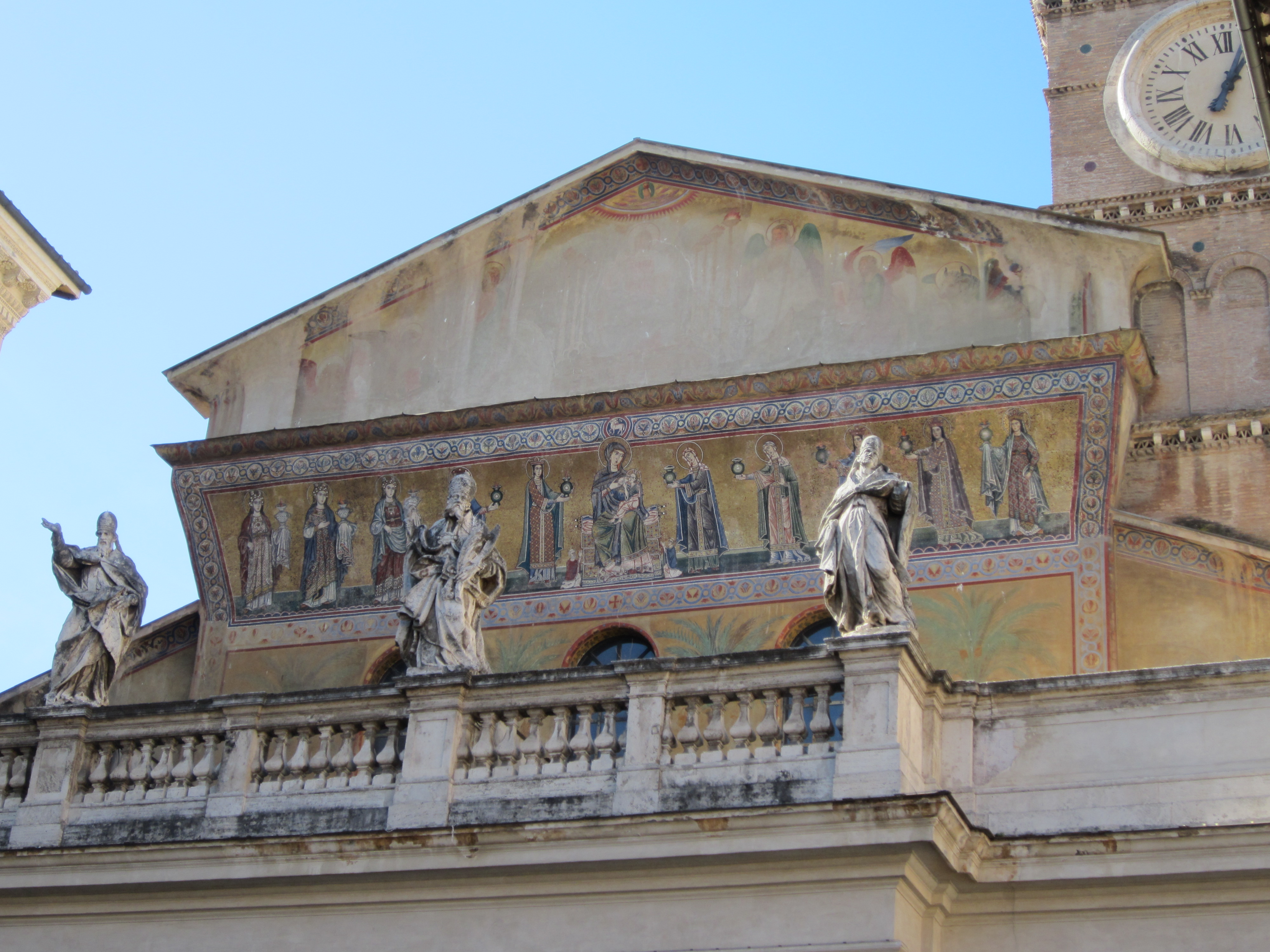
Today we visited two churches in district of Trastevere, the Basilica of Santa Maria and St. Cecilia Church.  In the first century Trastevere was a Jewish area of Rome.   It is believed that Trastevere is were saints Peter and Paul preached in the synagogues of Rome.  Both The Basilica of Santa Maria and St. Cecilia Church were originally house churches.   St. Cecilia was martyred in her home. In honor of her martyrdom a church was built on the site of her home.  The Basilica of Santa Maria is believed to one of the oldest churches in Rome and perhaps the first church in Rome were the mass was openly celebrated.  We celebrated mass at the Basilica.

Altar St. Cecilia Church

Altar St. Cecilia Church

Below the altar is statue made of St. Cecilia’s body.  The mold was made from her body that was exhumed 500 years after her martyrdom.  The canopy above the altar represents the tent where God dwelled with His people prior to the building of the Temple.

Nave St. Cecilia

Nave St. Cecilia

Circular halos are for deceased saints, while square halos are holy people who are still living.

Ceiling St Cecilia

Ceiling St Cecilia

Basilica of Santa Maria

Basilica of Santa Maria

Mosaic above Basilica of Santa Maria

Mosaic above Basilica of Santa Maria


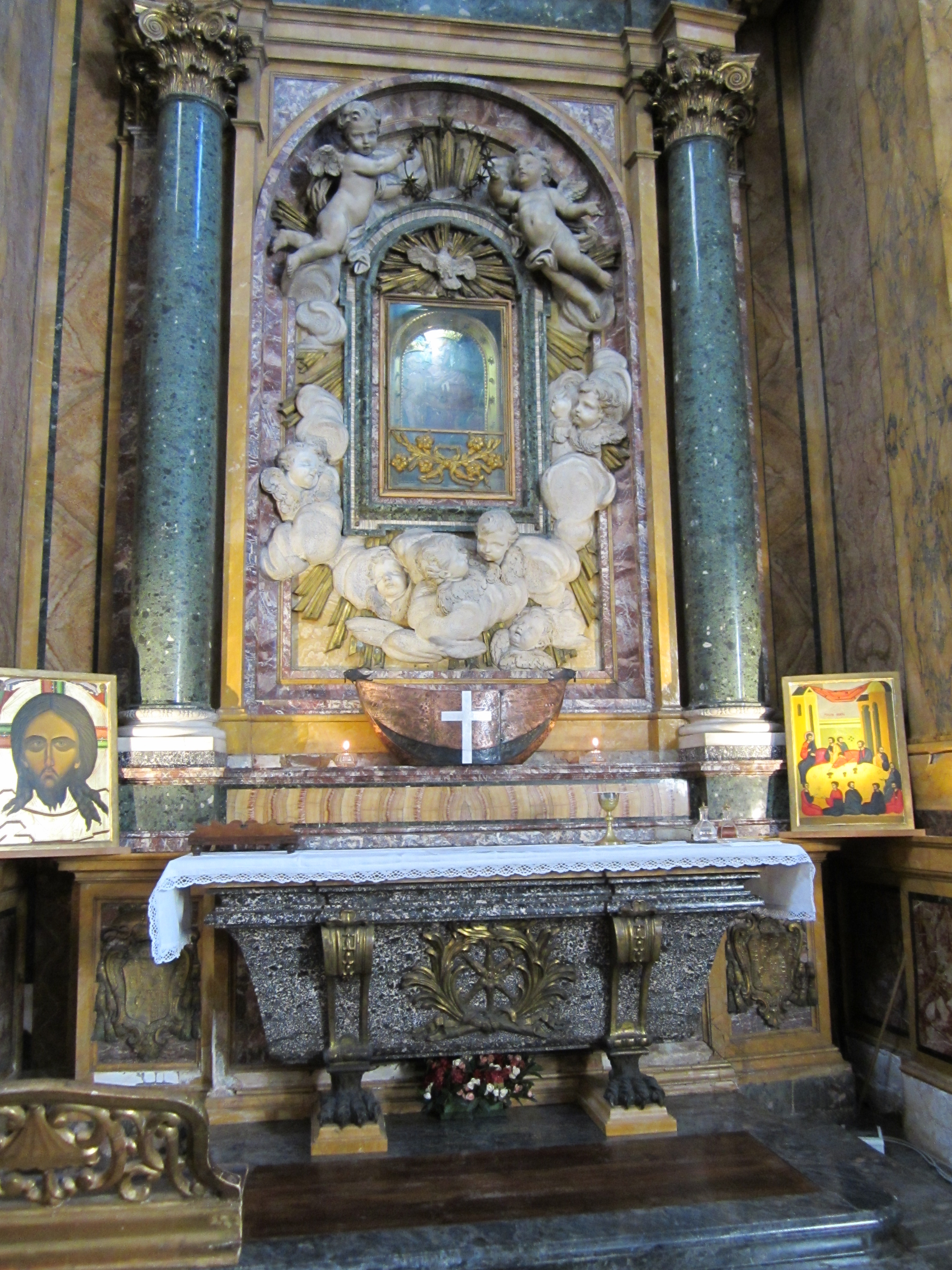
Side Altar Santa Maria

Side Altar Santa Maria


Side altar where we had mass at the Basilica of Santa Maria.


Posted in Essays, Pilgrimage | Tagged , , , , , , , , , , | 8 Comments

Indifference

IndifferenceIndifference in a garden results in a garden overran with weeds.  Indifference towards a family member or friend results in a broken or impaired relationship.  Spiritual indifference results in a lost soul.  The products of spiritual indifference are a lack of fear of God, disrespect of the Lord, dishonor of Christ and His Church, failure to repudiate sin, a disbelieve in Hell, and a disregard for eternal salvation.

We show our personal concern for a family member or friend by frequently visiting with them, sharing our lives with them, listening attentively to what they have to say, helping them out when they have a need, and introducing them to others we similarly love.

A relationship with our Heavenly Father is similarly maintained by spending at least some time each day with Him.  Time spent solely devoted to Him, listening to Him, sharing our life with Him, or just being with Him in silence.  The needs of Christ are provided for when those who are “hungry or thirsty or a stranger or naked or sick or in prison” (Matthew 25:44) are provided for in His name.  The Holy Spirit desires to be introduced to and work with those who we love.

Posted in Essays, Meditations On Biblical Verses, Uncategorized | Tagged , , , , , , , , , | 8 Comments

To Dewfall

To DewfallThe Eucharistic prayers of mass contain many beautiful phrases.  One of my favorite is, “Make holy, therefore, these gifts, we pray, by sending down your Spirit upon them like dewfall, so they may become for us the Body and Blood our Lord Jesus Christ” (Eucharistic Prayer II).

Dewfall, the unseen (water vapor in the atmosphere) slowly becomes seen (liquid water droplets).

God often works in our lives like dewfall. He slowly manifests Himself to us.  We cannot see Him, yet the effects of His presence in our lives can be seen.

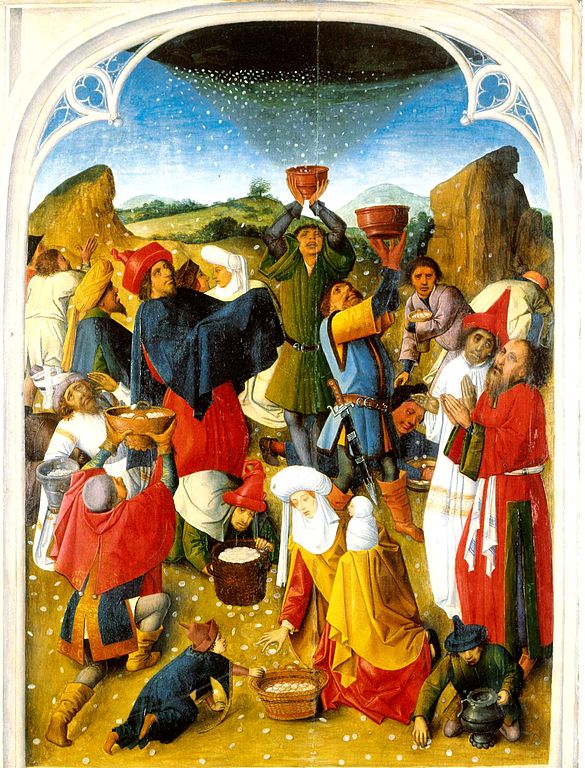
He is the dewfall that sustains us in desert.  He is our manna “in the morning dew lay round about the camp, and when the dew had gone up, there was on the face of the wilderness a fine, flake-like thing, fine as hoarfrost on the ground” (Exodus 16:13-14).

Posted in Essays, Meditations On Biblical Verses, Uncategorized | Tagged , , , , , , | 11 Comments

To a Healthy Heart

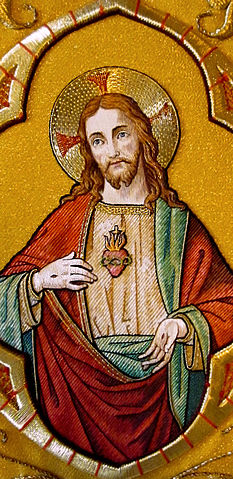
Sacred Heart of Jesus Saint Nicolas' Church Ghent, Belgium Goudborduurwerk H. van Severen

Sacred Heart of Jesus
Saint Nicolas’ Church
Ghent, Belgium
Goudborduurwerk H. van Severen

We are constantly reminded about the importance of diet and exercise in maintaining a physically healthy heart.  Little is said about maintaining a spiritually healthy heart.  Our physical health is dependent upon our heart’s ability to supply blood and oxygen.  Our spiritual health is dependent upon our heart’s ability to continually seek refuge in the Lord.

Refuge in the Lord is found through prayer.  The prayer can be formal and informal.  All we seek and do can be a form of prayer to Lord, if offered to God.  A smile given to a passing stranger is a form of prayer, if offered to God.  So too is the holding of our tongue a form of prayer, if offered to God.

Prayer is the key to a spiritually strong healthy heart.  Without prayer the heart atrophies, hardens and eventually spiritually dies.

Posted in Essays, Uncategorized | Tagged , , , , , , , , , | 4 Comments

Call

Esaltation of the Eucaristy-SalimbeniSome believe God is has little, if any, interest in man.  This is not the God of the Old and New Testaments.   God incessantly longs to be with us.  “When you call me, when you go to pray to me, I will listen to you.” (Jeremiah 29:12)  God faithfully hears and answers those who call, and He desires that we faithfully hear and answer His call.  He formed our heart to hear and respond to His call.  Our heart must attentively listen for God’s call.

Posted in Essays, Meditations On Biblical Verses, Uncategorized | Tagged , , , , , , , , , , | 3 Comments